


In short ⚡
Drayage firms are specialized logistics companies that handle short-distance transportation of containerized cargo, typically between ports, rail terminals, and warehouses. They serve as the critical first and last mile link in international supply chains, ensuring seamless cargo transfer between different transportation modes.Introduction
When a container arrives at the Port of Los Angeles, how does it reach a warehouse 30 miles inland? This seemingly simple question reveals a complex operation handled by drayage firms—the unsung heroes of international trade.
In global logistics, drayage represents the critical bridge between ocean freight and inland distribution. Without efficient drayage services, containers would remain stranded at terminals, disrupting entire supply chains and costing businesses thousands in demurrage fees.
Key characteristics of drayage firms include:
- Short-haul specialization: Focus on movements typically under 100 miles
- Intermodal expertise: Seamless transitions between ships, trains, and trucks
- Terminal knowledge: Deep familiarity with port operations and regulations
- Equipment management: Ownership or access to chassis and specialized containers
- Time-sensitive operations: Coordination with vessel schedules and warehouse receiving hours
Understanding Drayage Operations & Expertise
Drayage firms operate within a highly regulated and time-constrained environment. Their core function extends beyond simple trucking—they navigate complex terminal appointment systems, manage chassis availability, and ensure compliance with weight restrictions and safety regulations.
The operational complexity involves several critical components. First, port drayage requires drivers with TWIC (Transportation Worker Identification Credential) cards and specialized training for terminal access. Second, firms must maintain relationships with multiple marine terminal operators to secure appointment slots during peak periods.
Equipment management represents a significant operational challenge. The chassis crisis in North America forced many drayage firms to invest in their own chassis pools, transforming their business models from pure transportation to asset-intensive operations. This shift increased capital requirements but improved service reliability.
Technology integration has become essential for competitive drayage firms. Modern operators deploy real-time tracking systems, automated dispatch platforms, and API connections with terminal operating systems. These tools enable dynamic routing and proactive exception management.
According to the Federal Motor Carrier Safety Administration, drayage firms must maintain specific insurance coverage and comply with Hours of Service regulations, even for short-distance moves. At DocShipper, we partner exclusively with licensed and insured drayage providers to ensure compliance and protect our clients’ cargo throughout the first-mile journey.
Concrete Examples & Market Data
The drayage industry demonstrates significant variation in pricing and service models depending on geographic location and operational scope. Understanding these differences helps importers optimize their logistics strategies.
Comparative Pricing Analysis
| Service Type | Distance Range | Average Cost (USD) | Typical Duration |
|---|---|---|---|
| Port-to-Warehouse | 10-50 miles | $300-$600 | 4-8 hours |
| Rail Ramp Drayage | 5-30 miles | $250-$450 | 3-6 hours |
| Cross-Town Transfer | 15-40 miles | $350-$550 | 5-10 hours |
| Expedited Service | Any distance | +50-100% premium | 2-4 hours |
Real-World Case Study
A furniture importer in New Jersey receives 40 containers monthly from Vietnam via the Port of New York/New Jersey. Their drayage firm manages:
- Container pickup: Coordination with terminal within free time window (typically 5 days)
- Chassis sourcing: Securing appropriate equipment for 40′ high-cube containers
- Delivery scheduling: Matching warehouse receiving capacity (8 containers/day)
- Empty return: Returning containers to designated depot within 3 days
- Documentation: Providing delivery receipts and proof of empty return
Total monthly drayage cost: $18,000-$24,000 depending on fuel surcharges and seasonal demand fluctuations.
Key Market Insights
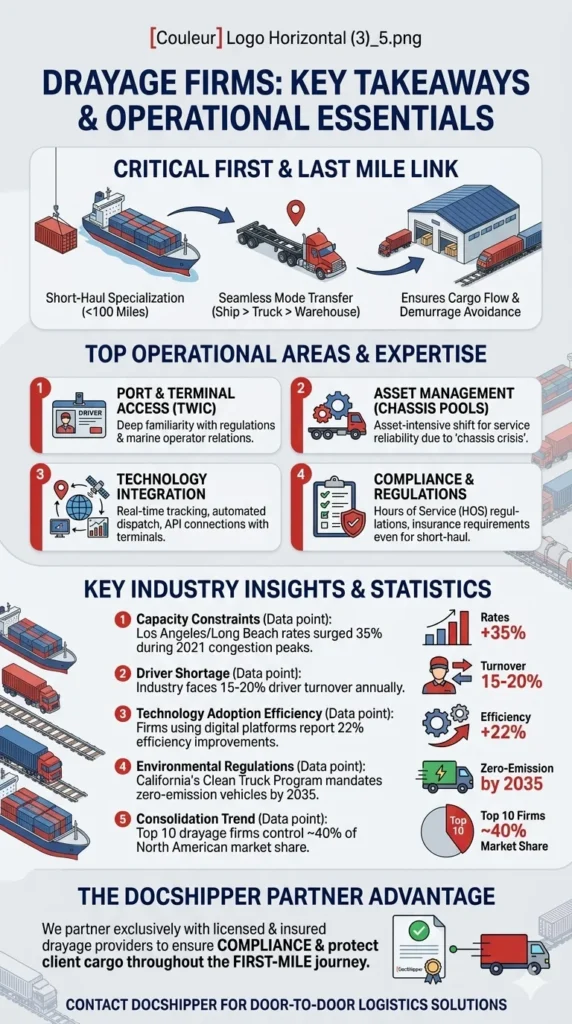
- Capacity constraints: Los Angeles/Long Beach drayage rates increased 35% during 2021 congestion peaks
- Driver shortage: Industry faces 15-20% turnover annually due to demanding working conditions
- Technology adoption: Firms using digital platforms report 22% efficiency improvements
- Environmental regulations: California’s Clean Truck Program requires zero-emission vehicles by 2035
- Consolidation trend: Top 10 drayage firms control approximately 40% of North American market share
Conclusion
Drayage firms provide the essential infrastructure connecting global ocean freight to local distribution networks. Their specialized expertise, equipment, and terminal relationships ensure cargo flows efficiently through the critical first and last mile of international shipments.
Need expert guidance on drayage coordination for your imports? Contact DocShipper for comprehensive door-to-door logistics solutions.
📚 Quizz
Test Your Knowledge: Drayage Firms
Q1 — What best defines the primary role of a drayage firm?
Q2 — A common misconception is that drayage firms are simply standard trucking companies. What key operational requirement sets them apart?
Q3 — A furniture importer receives 40 containers per month at the Port of New York/New Jersey. After cargo is unloaded at the warehouse, what must the drayage firm do to avoid additional charges?
🎯 Your Result
📞 Free Quote in 24hFAQ | Drayage Firms: Definition, Services & Concrete Examples
Drayage specifically refers to short-distance container transport between ports/rail terminals and warehouses, while trucking encompasses all road freight transportation. Drayage requires specialized terminal access, chassis management, and intermodal coordination that standard trucking does not.
Drayage costs range from $250-$600 per container depending on distance, location, and service type. Major port markets like Los Angeles and New York command premium rates. Fuel surcharges, chassis fees, and detention charges may apply additionally.
Common delay factors include port congestion, chassis shortages, terminal appointment limitations, customs holds, and warehouse receiving restrictions. Peak season volumes and labor disruptions can extend standard 4-8 hour moves to multiple days.
Many freight forwarders include drayage in their service packages, but some importers prefer direct relationships with drayage firms for better control and pricing. Your choice depends on shipment volume, complexity, and internal logistics capabilities.
A chassis is the wheeled frame that supports containers during road transport. Chassis availability has become a critical constraint in drayage operations, with many firms now maintaining their own pools rather than relying on terminal-provided equipment.
After delivering cargo, drayage firms return empty containers to designated depots within specified timeframes (typically 3-5 days). Failure to return empties promptly results in per diem charges that can exceed $100 daily.
Per diem refers to daily charges for holding containers or chassis beyond free time allowances. These fees incentivize quick cargo unloading and equipment return, with rates typically ranging from $75-$150 per day depending on equipment type.
Specialized drayage providers offer flatbed and lowboy services for oversized containers and out-of-gauge cargo. These moves require special permits, route surveys, and often escort vehicles, commanding premium rates 2-3 times standard container drayage.
Street turn allows exporters to use an empty container just unloaded by an importer, eliminating the need to return it to the terminal first. This practice reduces empty miles, cuts costs by $100-$200 per move, and improves chassis utilization.
Evaluate drayage providers based on terminal relationships, equipment availability, technology capabilities, insurance coverage, safety records, and customer references. Established firms with direct terminal access and owned chassis pools typically provide more reliable service during peak periods.
Dual transaction drayage involves picking up a loaded import container and returning with a loaded export container in a single trip. This efficient practice reduces costs and environmental impact but requires precise coordination between importers, exporters, and terminals.
High-volume shippers can negotiate contracted rates with drayage firms, typically achieving 10-20% discounts compared to spot market pricing. Contract terms usually require minimum monthly volume commitments and may include fuel surcharge formulas tied to diesel prices.
Need Help with
Logistics or Sourcing ?
First, we secure the right products from the right suppliers at the right price by managing the sourcing process from start to finish. Then, we simplify your shipping experience - from pickup to final delivery - ensuring any product, anywhere, is delivered at highly competitive prices.


Fill the Form
Prefer email? Send us your inquiry, and we’ll get back to you as soon as possible.
Contact us




