


In short ⚡
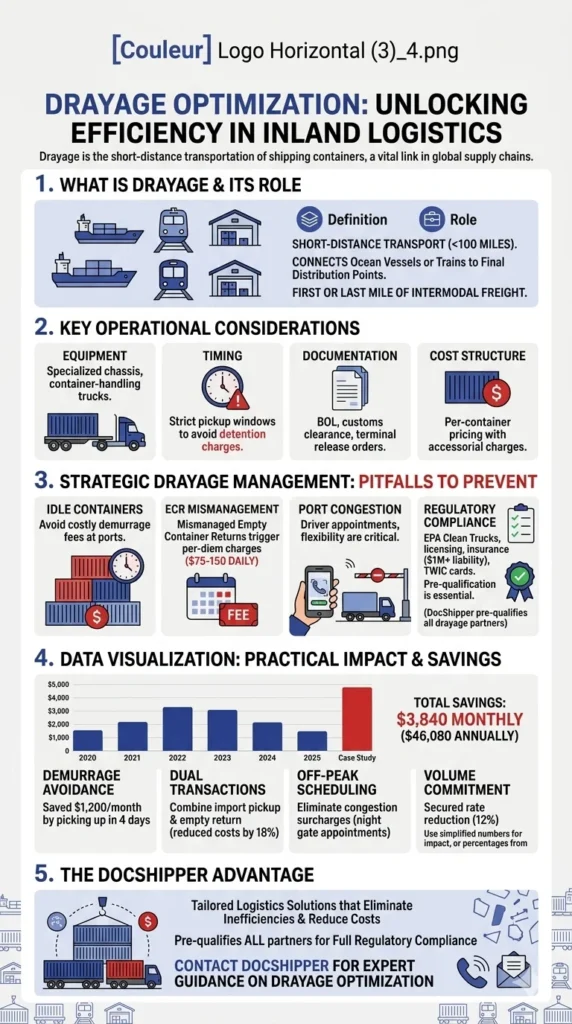
Drayage is the short-distance transportation of shipping containers or cargo, typically between ports, rail terminals, and warehouses. This critical first or last mile of intermodal freight movement connects ocean vessels or trains to final distribution points, forming an essential link in global supply chains.
Introduction
Many importers underestimate drayage costs until containers sit idle at ports, accumulating demurrage fees. This short-haul transport segment often represents 15-25% of total inland logistics costs, yet remains poorly understood.
Drayage serves as the vital connector in intermodal transportation. Without efficient container movement from port to warehouse, entire supply chains stall. Understanding drayage mechanics prevents delays, reduces costs, and ensures regulatory compliance.
- Distance: Typically under 100 miles from port terminals
- Equipment: Specialized chassis and container-handling trucks
- Timing: Strict pickup windows to avoid detention charges
- Documentation: BOL, customs clearance, and terminal release orders
- Cost structure: Per-container pricing with accessorial charges
Drayage Operations & Expertise
Drayage operations involve multiple stakeholders and complex coordination. The process begins when a container discharge notification arrives from the shipping line. The drayage provider must secure a chassis, obtain terminal release, and schedule pickup within the port’s free time window.
Port congestion significantly impacts drayage efficiency. At major gateways like Los Angeles-Long Beach, appointment systems now regulate truck entry. Drivers must secure slots days in advance, making flexibility critical for avoiding delays.
The Empty Container Return (ECR) represents a hidden complexity. After cargo delivery, containers must return to designated depots within specified timeframes. Mismanagement triggers per-diem charges ranging from $75-150 daily.
Regulatory compliance adds another layer. The Clean Truck Program at California ports mandates EPA-compliant vehicles. Drayage carriers must maintain proper licensing, insurance ($1M+ liability), and TWIC cards for port access. At DocShipper, we pre-qualify all drayage partners to ensure full regulatory compliance and prevent shipment delays.
Intermodal coordination requires precise timing. When containers arrive via rail, they must transfer to truck chassis at intermodal facilities before final delivery. This double-handling increases complexity and cost but enables long-haul efficiency.
Real-World Examples & Data
Drayage costs vary dramatically by location and service type. The following table illustrates typical pricing structures across major U.S. ports:
| Port | Standard Drayage | Expedited Service | Avg. Distance |
|---|---|---|---|
| Los Angeles/Long Beach | $450-650 | $800-1,100 | 35 miles |
| New York/New Jersey | $500-700 | $850-1,200 | 28 miles |
| Savannah | $350-500 | $600-850 | 22 miles |
| Houston | $400-550 | $700-950 | 30 miles |
Case Study: An electronics importer in Chicago receives 20 containers monthly from Shenzhen via Los Angeles. Original drayage quotes averaged $625 per container. After analysis, we identified three cost drivers:
- Demurrage avoidance: Pickup within 4 days saved $1,200/month in port storage fees
- Dual transactions: Combining import pickup with empty return reduced costs by 18%
- Off-peak scheduling: Night gate appointments eliminated $85 congestion surcharges
- Volume commitment: Guaranteed monthly volume secured 12% rate reduction
- Total savings: $3,840 monthly ($46,080 annually) through optimized drayage strategy
Industry data shows drayage capacity constraints create volatility. During peak seasons (August-October), rates can surge 30-40% in congested markets. The 2021 port crisis saw Los Angeles drayage rates exceed $2,000 per container as chassis shortages compounded delays.
Conclusion
Drayage remains the most underestimated component of international logistics. Proper planning, carrier selection, and timing optimization prevent costly delays and demurrage charges. Strategic drayage management directly impacts supply chain velocity and total landed costs.
Need expert guidance on drayage optimization for your shipments? Contact DocShipper for tailored logistics solutions that eliminate inefficiencies and reduce costs.
📚 Quiz
Test Your Knowledge: Drayage
Q1 — What best defines drayage in logistics?
Q2 — A shipper picks up an import container from the port but fails to return the empty container to the depot on time. What type of charge will they incur?
Q3 — An importer wants to reduce their drayage costs at the Port of Los Angeles. Which strategy would most directly lower their per-container rate?
🎯 Your Result
📞 Free Quote in 24hFAQ | Drayage: Definition, Process & Real-World Examples
Drayage specifically refers to short-distance container transport between intermodal points (ports, rail yards, warehouses), while trucking encompasses all road freight movement regardless of distance or cargo type.
Standard drayage within 50 miles takes 4-8 hours including terminal wait times. Port congestion can extend this to 12+ hours during peak periods or at heavily trafficked facilities.
Primary causes include port congestion, chassis shortages, customs holds, incomplete documentation, missed appointment slots, and equipment inspection failures at terminal gates.
Only if you possess proper licensing (MC/DOT numbers), port-compliant equipment, terminal access credentials (TWIC), and adequate insurance coverage. Most shippers use licensed drayage carriers.
Demurrage charges apply when containers remain at terminals beyond free time (typically 3-5 days). Detention fees accrue when containers stay on chassis beyond allowed periods outside the terminal.
Base rates depend on distance and container size (20'/40'/45'). Additional charges include fuel surcharges, chassis rental, waiting time, congestion fees, hazmat handling, and overweight penalties.
A chassis is the wheeled frame that holds shipping containers during road transport. Chronic chassis shortages at major ports frequently delay drayage operations and increase costs.
Yes, for import containers. Customs release must be obtained before the terminal will issue a delivery order. Attempting pickup without clearance results in rejected gate transactions and wasted trips.
Pier drayage moves containers directly from vessel to nearby warehouse (under 10 miles). Street drayage involves longer distances to inland distribution centers, typically 10-100 miles from the port.
Hazmat drayage costs 25-50% more due to specialized licensing requirements, additional insurance, restricted routing, and enhanced documentation. Not all drayage carriers handle hazardous cargo.
Yes, pre-booking is recommended. Most ports require appointment systems. Scheduling 48-72 hours ahead secures preferred time slots and reduces terminal wait times significantly.
The drayage carrier's cargo insurance covers damage occurring during transport. Document all damage with photos at delivery. File claims immediately, as most policies have strict 24-48 hour reporting windows.
Need Help with
Logistics or Sourcing ?
First, we secure the right products from the right suppliers at the right price by managing the sourcing process from start to finish. Then, we simplify your shipping experience - from pickup to final delivery - ensuring any product, anywhere, is delivered at highly competitive prices.


Fill the Form
Prefer email? Send us your inquiry, and we’ll get back to you as soon as possible.
Contact us




