


In short ⚡
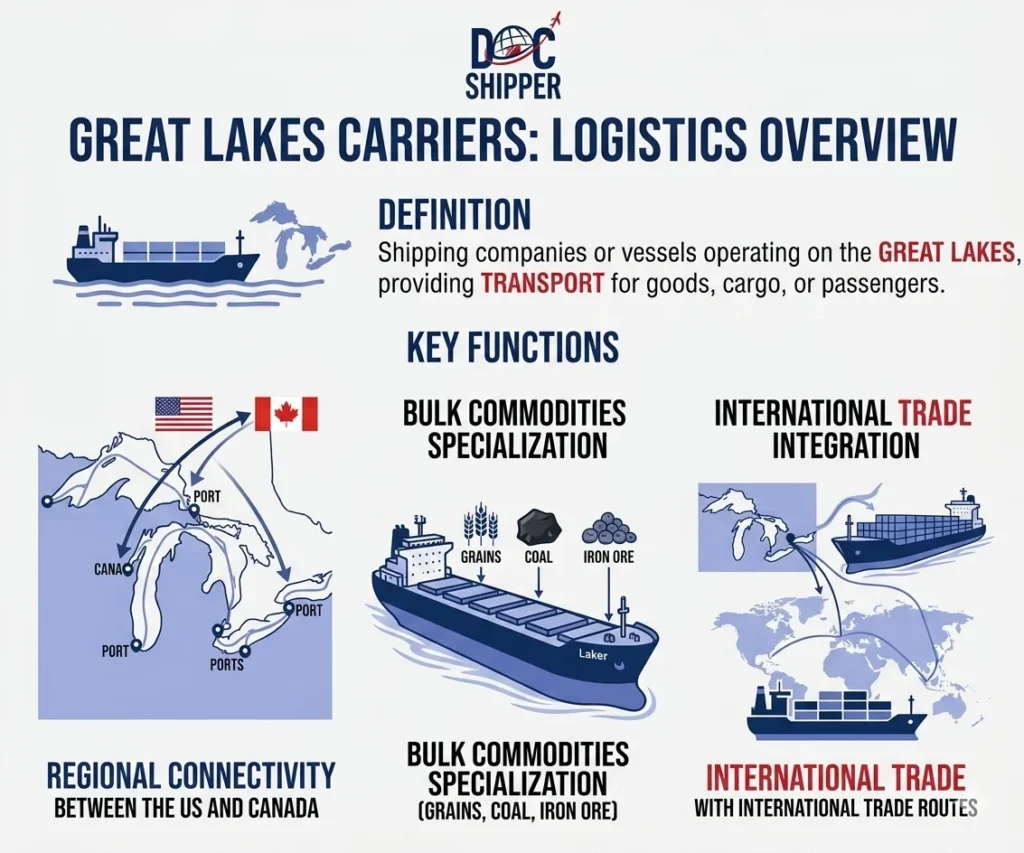
Great Lakes Carriers are specialized maritime vessels designed to transport bulk commodities and containerized cargo through the five interconnected freshwater lakes between the United States and Canada. These vessels navigate a unique inland waterway system critical for transporting iron ore, grain, coal, and steel products across North America's industrial heartland.
Introduction
Many importers overlook the Great Lakes shipping route when planning North American logistics. This strategic waterway connects eight U.S. states and two Canadian provinces, offering cost-effective alternatives to road and rail transport.
The Great Lakes maritime system handles over 160 million tons of cargo annually. This inland shipping route reduces transportation costs by up to 40% compared to overland alternatives for bulk commodities.
Understanding Great Lakes Carriers matters for:
- Bulk commodity shippers moving grain, iron ore, or coal across the Midwest
- Manufacturing companies requiring steel and raw materials for production
- International exporters accessing interior North American markets via the St. Lawrence Seaway
- Seasonal logistics planners optimizing shipping windows between March and January
- Cost-conscious businesses seeking economical alternatives to trucking and rail
Operational Expertise & Technical Specifications
Great Lakes Carriers operate under unique constraints. The St. Lawrence Seaway lock system limits vessel dimensions to 740 feet length and 78 feet beam width. This creates a specialized fleet distinct from ocean-going vessels.
The shipping season typically runs from late March to mid-January. Ice formation closes navigation channels during winter months. Carriers must complete shipments before the freeze or wait until spring thaw.
Vessel types include self-unloading bulk carriers equipped with conveyor systems. These ships discharge cargo without port infrastructure, reaching facilities lacking specialized unloading equipment. Standard vessels carry 25,000 to 78,000 deadweight tons depending on route depth restrictions.
Draft limitations vary by lake and connecting channels. The Welland Canal restricts draft to 26.5 feet, while Lake Superior ports accommodate deeper vessels. Carriers must calculate payload based on specific route parameters.
Regulatory compliance follows both U.S. Coast Guard and Transport Canada requirements. The St. Lawrence Seaway Management Corporation coordinates binational navigation standards. Environmental regulations mandate ballast water treatment to prevent invasive species transfer.
At DocShipper, we coordinate Great Lakes shipments by verifying vessel availability during the navigation season and ensuring cargo specifications match carrier capabilities. Our logistics specialists optimize routing through the most efficient lake combination.
Concrete Examples & Shipping Data
Great Lakes shipping delivers measurable cost advantages. A 60,000-ton iron ore shipment from Duluth to Cleveland costs approximately $8-12 per ton by vessel, compared to $35-45 per ton by rail. This represents savings exceeding $1.6 million per shipment.
Case Study: Agricultural Export Route
A grain exporter ships 50,000 tons of soybeans from Chicago to Montreal for overseas distribution. The Great Lakes route covers 1,050 nautical miles in 4-5 days. Rail transport would require 7-9 days and cost 60% more. The vessel transits through Lakes Michigan, Huron, Erie, and Ontario before reaching the St. Lawrence River.
Comparative Shipping Analysis:
| Route | Distance | Transit Time | Cost/Ton | Capacity |
|---|---|---|---|---|
| Duluth to Cleveland (Iron Ore) | 840 nautical miles | 3-4 days | $10 | 60,000 tons |
| Chicago to Toledo (Grain) | 280 nautical miles | 2 days | $8 | 25,000 tons |
| Thunder Bay to Hamilton (Coal) | 745 nautical miles | 3-5 days | $12 | 70,000 tons |
| Detroit to Montreal (Steel) | 620 nautical miles | 4 days | $15 | 30,000 tons |
Key Operational Insights:
- Seasonal planning essential: 92% of annual tonnage moves between April and November
- Lock transit delays: Welland Canal passage adds 8-12 hours to journey time
- Fuel efficiency: Great Lakes vessels consume 40% less fuel per ton-mile than heavy trucks
- Port accessibility: 50+ commercial ports serve the Great Lakes system
- International connectivity: Seaway access allows ocean vessels up to 740 feet to reach interior ports
Weather conditions significantly impact operations. November storms account for 35% of seasonal delays. Experienced carriers build buffer time into schedules during shoulder seasons. Winter ice formation typically begins in Lake Superior by late December, progressing to southern lakes by mid-January.
Conclusion
Great Lakes Carriers provide cost-effective, high-capacity transport for bulk commodities across North America’s industrial corridor. Understanding seasonal windows, vessel specifications, and routing options optimizes logistics planning.
Need expert guidance on Great Lakes shipping routes? Contact DocShipper for customized logistics solutions tailored to your cargo requirements.
📚 Quiz
Test Your Knowledge: Great Lakes Carriers
What is the primary function of Great Lakes Carriers?
What is a critical operational constraint unique to Great Lakes Carriers?
A manufacturer needs to ship 60,000 tons of iron ore from Duluth to Cleveland. Based on the article's data, which statement is correct?
🎯 Your Result
📞 Free Quote in 24hFAQ | Great Lakes Carriers: Definition, Operations & Shipping Examples
Great Lakes Carriers specialize in bulk commodities including iron ore, coal, limestone, grain, and steel products. These vessels efficiently transport large volumes of homogeneous cargo. Containerized cargo also moves through the system, though less commonly than bulk materials. The self-unloading capabilities make them ideal for facilities lacking sophisticated port infrastructure.
Great Lakes shipping typically costs 40-60% less than rail for bulk commodities over similar distances. Per-ton costs range from $8-15 by vessel compared to $35-50 by rail and $60-80 by truck. However, longer transit times and seasonal restrictions must factor into total logistics planning. The cost advantage increases proportionally with shipment size and distance.
Vessels transiting the St. Lawrence Seaway system are limited to 740 feet length, 78 feet beam, and 26.5 feet draft. These "Seawaymax" dimensions are dictated by lock chamber sizes, particularly the Welland Canal connecting Lakes Erie and Ontario. Lakers designed exclusively for upper Great Lakes routes can exceed these dimensions since they never transit the Seaway locks.
The navigation season typically runs from late March through mid-January, weather permitting. Ice formation closes channels during winter months. Lake Superior usually freezes first in December, while southern lakes remain navigable into January. The St. Lawrence Seaway officially closes around late December and reopens in late March after ice-breaking operations complete.
Yes, the St. Lawrence Seaway connects the Great Lakes to the Atlantic Ocean, allowing ocean-going vessels meeting size restrictions to reach interior ports. International cargo from Europe, Africa, and South America regularly transits to cities like Chicago, Detroit, and Cleveland. The system handles both import and export cargo, providing global connectivity to North America's industrial heartland.
Standard maritime documentation includes bills of lading, cargo manifests, customs declarations for cross-border shipments, and environmental compliance certificates. U.S.-Canada shipments require customs clearance through both countries. Ballast water management documentation is mandatory under binational environmental regulations. Hazardous materials require specialized permits and safety documentation.
Transit times vary by route and vessel speed. Duluth to Cleveland takes 3-4 days covering 840 nautical miles. Chicago to Toledo requires approximately 2 days for 280 miles. Welland Canal transit adds 8-12 hours to any route between upper and lower lakes. Weather conditions, lock queues, and vessel traffic can extend these estimates by 10-20%.
Yes, strict environmental regulations govern Great Lakes shipping. Ballast water treatment prevents invasive species introduction. Emissions standards follow EPA and Transport Canada requirements. Fuel quality specifications reduce sulfur content. The Great Lakes-St. Lawrence Seaway system is designated an Emission Control Area requiring low-sulfur fuel or exhaust scrubbers. Vessel inspections ensure compliance before navigation approval.
Late-season cargo faces storage until spring navigation reopens or must route via alternative transport modes. Many shippers arrange winter rail or truck contingencies. Some ports offer heated storage facilities for grain and other commodities. Planning shipments to arrive before mid-December minimizes closure risk. Winter storage costs and delayed delivery must factor into total logistics budgeting.
Yes, though bulk commodities dominate Great Lakes shipping. Container-on-vessel services operate on certain routes, particularly for international cargo transiting the Seaway. Container capacity is limited compared to ocean-going container ships. Specialized vessels with container handling capabilities serve this niche market. The system works best for full container loads rather than LCL shipments.
Marine cargo insurance covers Great Lakes shipments similarly to ocean freight. Policies should address seasonal weather risks, lock transit, and potential winter storage. Hull and machinery insurance for vessels follows specialized Great Lakes underwriting given unique operational conditions. Cross-border shipments require coverage meeting both U.S. and Canadian regulatory standards. Consult specialized marine insurance brokers for Great Lakes expertise.
Weather significantly impacts operations, particularly during spring and fall shoulder seasons. November storms account for 35% of seasonal delays. Fog conditions in connecting channels can halt traffic for hours or days. Ice formation in December forces early season closures. Carriers build buffer time into schedules, typically adding 10-15% contingency to quoted transit times for weather variability.
Need Help with
Logistics or Sourcing ?
First, we secure the right products from the right suppliers at the right price by managing the sourcing process from start to finish. Then, we simplify your shipping experience - from pickup to final delivery - ensuring any product, anywhere, is delivered at highly competitive prices.


Fill the Form
Prefer email? Send us your inquiry, and we’ll get back to you as soon as possible.
Contact us




