


In short ⚡
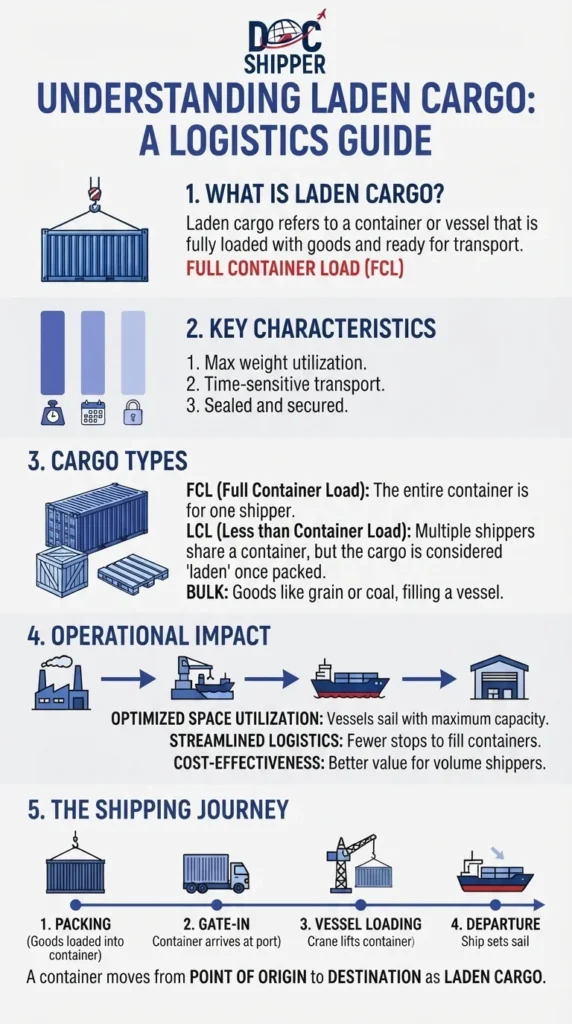
Laden refers to the process of loading cargo onto a vessel, aircraft, truck, or rail car for transportation. In international logistics, laden containers or vehicles are those carrying goods, as opposed to empty units. This fundamental operation directly impacts transit times, cargo security, and operational efficiency throughout the supply chain.
Introduction
Many importers underestimate the complexity of laden cargo operations, assuming loading is simply placing boxes in containers. In reality, improper laden procedures cause millions in damages annually through cargo shifts, weight distribution issues, and regulatory violations.
The distinction between laden and unladen units forms the foundation of freight pricing, vessel capacity planning, and customs documentation. Understanding laden operations is essential for anyone managing international shipments.
Key characteristics of laden cargo operations include:
- Weight distribution requirements – Proper load balance prevents transport accidents and equipment damage
- Securing methods – Lashing, blocking, and bracing techniques vary by transport mode and cargo type
- Documentation accuracy – Bills of lading must reflect actual laden weight and contents
- Regulatory compliance – Axle weight limits, gross vehicle weight restrictions, and maritime safety codes
- Cost implications – Laden container rates differ significantly from empty repositioning charges
Laden Operations & Technical Expertise
The laden process involves systematic cargo placement following strict weight distribution formulas. Maritime vessels use the Center of Gravity (CoG) principle, calculating longitudinal and transverse balance to prevent listing or excessive draft. Aircraft apply similar calculations with critical center of gravity limits that directly affect flight safety.
In container shipping, a laden unit must comply with IMO regulations regarding Verified Gross Mass (VGM). Since July 2016, the International Maritime Organization mandates that all laden containers have certified weight declarations before loading. This requirement emerged after incidents where misdeclared weights caused vessel instability. Reference: IMO Container Safety guidelines.
Road transport distinguishes between laden weight (actual cargo plus vehicle) and Maximum Authorized Mass (MAM). European Union Directive 96/53/EC establishes that laden trucks cannot exceed 40 tonnes on standard roads, with specific axle load distribution requirements. Overloaded laden vehicles face immediate fines and operational restrictions.
Laden container positioning aboard vessels follows cell guides and bay plans. Terminal operators use specialized software calculating optimal laden unit placement based on discharge ports, weight categories, and hazardous material segregation. Misplaced laden containers require costly restows at subsequent ports.
At DocShipper, we coordinate laden operations across all transport modes, ensuring compliance with weight regulations and proper cargo securing before departure. Our teams verify VGM certificates and conduct pre-shipment inspections to prevent loading delays.
Practical Examples & Industry Data
Understanding laden operations through real-world scenarios clarifies their practical impact on logistics costs and timelines.
Case Study: Laden vs. Unladen Container Rates
| Route | Laden 20′ Rate | Unladen Repositioning | Cost Difference |
|---|---|---|---|
| Shanghai → Rotterdam | $2,800 | $450 | 84% higher |
| Los Angeles → Hong Kong | $1,200 | $350 | 71% higher |
| Hamburg → New York | $1,900 | $280 | 85% higher |
These figures demonstrate why carriers prioritize laden cargo over empty container repositioning. Trade imbalances create laden imbalance scenarios where westbound containers from Asia arrive full but return partially empty, affecting global freight economics.
Weight Compliance Example
A manufacturer ships machinery from Germany to Brazil. The laden container weight calculation includes:
- Cargo weight: 18,500 kg
- Packaging materials: 1,200 kg
- Container tare weight: 2,300 kg (standard 20′ container)
- Total laden weight: 22,000 kg
The maximum gross weight for a 20′ container is typically 24,000 kg. This shipment complies with weight limits. However, if the same cargo used a 40′ High Cube container (tare weight 3,900 kg), the laden weight would be 23,600 kg, still within the 30,480 kg maximum but affecting truck routing due to bridge weight restrictions.
Industry Statistics
- 68% of container ships operate with laden factors above 85% on major Asia-Europe routes
- Incorrectly declared laden weights cause approximately $500 million annually in vessel damage and port accidents
- Air cargo laden factors average 70-75% capacity utilization on passenger-freighter combinations
- Road freight laden efficiency has improved 12% since 2015 through better load planning software
DocShipper provides laden weight verification services and load planning consultations, ensuring your shipments meet all regulatory requirements while optimizing transport costs. Our expertise prevents costly delays from weight-related compliance failures.
Conclusion
Laden operations represent far more than simple cargo loading—they encompass weight compliance, safety protocols, and cost optimization across global supply chains. Proper laden procedures protect cargo integrity while ensuring regulatory adherence.
Need assistance with laden cargo operations or weight verification? Contact DocShipper for expert guidance on international shipping requirements.
📚 Quiz
Test Your Knowledge: Laden in Cargo Logistics
What does the term "laden" refer to in international logistics?
A shipper believes laden weight only includes the cargo itself. Is this correct?
Your company ships machinery in a 20' container: cargo 18,500 kg + packaging 1,200 kg + container tare 2,300 kg = 22,000 kg total. The maximum gross weight for a 20' container is 24,000 kg. What action should you take?
🎯 Your Result
📞 Free Quote in 24hFAQ | Laden: Definition, Operations & Practical Examples in Cargo Logistics
Laden refers to containers or vehicles carrying cargo, while unladen means empty. Laden units incur full freight charges, whereas unladen equipment often moves at reduced repositioning rates. The distinction affects pricing, weight calculations, and operational planning throughout the logistics chain.
Laden weight equals the combined weight of cargo, packaging materials, dunnage, and the container's tare weight. This total must not exceed the container's Maximum Gross Weight (typically 24,000 kg for 20' and 30,480 kg for 40' containers). Accurate laden weight is mandatory under VGM regulations.
Verified Gross Mass regulations require shippers to provide certified laden weight before container loading. Two methods exist: weighing the entire packed container (Method 1) or weighing all contents and adding tare weight (Method 2). Non-compliance prevents vessel loading and causes shipment delays.
Yes. Ports reject laden containers exceeding weight limits, lacking proper documentation, or showing signs of improper loading. Common rejection reasons include incorrect VGM declarations, visible cargo shifts, or hazardous material misdeclaration. Rejected laden units require unloading and re-documentation.
Laden factor represents the percentage of container slots filled with laden units versus total vessel capacity. A 90% laden factor means 90% of available slots carry cargo. High laden factors indicate strong demand and profitable routes, while low factors suggest trade imbalances.
Heavier laden trucks consume more fuel, require specific route permits for bridge crossings, and may need specialized chassis. Laden weights exceeding 26 tonnes often require additional axles or route modifications, increasing transportation costs by 15-30% compared to lighter loads.
Misdeclared laden weights cause serious consequences: vessel instability, potential accidents, port fines ranging from $5,000-$50,000, shipment delays, and permanent shipper blacklisting. Carriers may refuse future bookings from shippers with history of weight declaration errors.
Laden containers cost 70-85% more than empty repositioning because they generate revenue and require full service provisions. Empty containers move at discounted rates as carriers need them repositioned to high-demand locations. Laden cargo subsidizes the global container circulation system.
Air cargo laden weight limits vary by aircraft type. Narrow-body planes typically handle 10-20 tonnes, while wide-body freighters manage 80-120 tonnes. However, volumetric weight often determines pricing—cargo density affects laden capacity more than absolute weight in aviation.
Customs use weighbridges, X-ray scanning, and physical inspections to verify laden cargo declarations. Discrepancies between declared and actual laden weights trigger detailed examinations, potential penalties, and increased scrutiny on future shipments. Accurate documentation prevents these delays.
Yes. Laden containers require specific stacking patterns based on weight distribution. Heavy laden units typically occupy lower vessel tiers, while lighter laden cargo and empty containers stack higher. Improper laden container stacking causes vessel stability issues and potential cargo damage.
Laden cargo insurance premiums depend on declared value, cargo type, and route. Misdeclared laden weights void insurance coverage—if cargo shifts due to improper weight distribution, insurers may deny claims. Accurate laden weight documentation is essential for valid cargo insurance protection.
Need Help with
Logistics or Sourcing ?
First, we secure the right products from the right suppliers at the right price by managing the sourcing process from start to finish. Then, we simplify your shipping experience - from pickup to final delivery - ensuring any product, anywhere, is delivered at highly competitive prices.


Fill the Form
Prefer email? Send us your inquiry, and we’ll get back to you as soon as possible.
Contact us




