


In short ⚡
Cartment refers to the systematic process of loading goods into containers, trucks, or other transport units for shipment. This critical logistics operation ensures cargo is optimally arranged, secured, and documented to maximize space utilization, prevent damage during transit, and comply with weight distribution regulations across international supply chains.Introduction
Many importers underestimate cartment planning, leading to rejected containers, damaged goods, or unexpected demurrage charges at destination ports. Proper cartment goes beyond simply filling space—it requires strategic weight distribution, regulatory compliance, and damage prevention protocols.
In international trade, cartment directly impacts freight costs, customs clearance speed, and product integrity. Poor loading practices cause approximately 15% of cargo damage claims globally, according to industry reports.
Key aspects of professional cartment include:
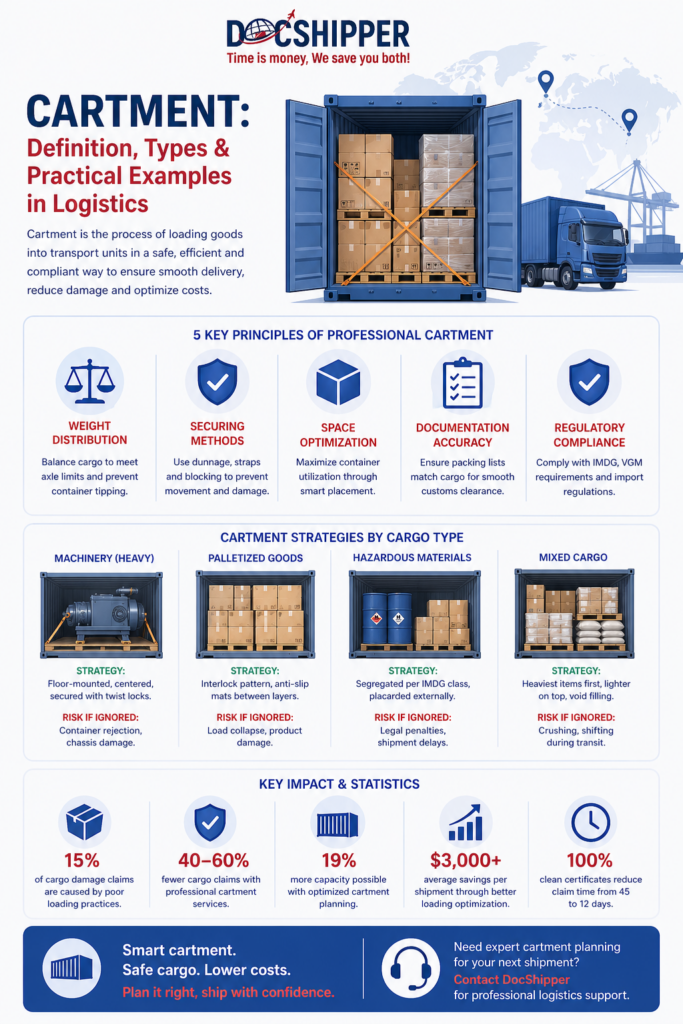
- Weight distribution – balancing cargo to meet axle load limits and prevent container tipping
- Securing methods – using dunnage, straps, and blocking to prevent shifting during ocean or road transit
- Space optimization – maximizing container utilization through calculated placement strategies
- Documentation accuracy – ensuring packing lists match physical cargo for customs verification
- Regulatory compliance – adhering to IMDG codes, VGM requirements, and destination country import rules
Understanding Cartment Operations & Compliance
Effective cartment begins with load planning software that calculates optimal placement based on cargo dimensions, weight, and fragility. Professional freight forwarders use 3D modeling tools to visualize container utilization before physical loading begins.
The Verified Gross Mass (VGM) regulation, mandated by SOLAS amendments, requires shippers to provide certified container weights before vessel loading. Non-compliance results in container rejection at ports. This regulation emerged after numerous vessel stability incidents caused by misdeclared cargo weights.
Center of gravity positioning represents a critical technical consideration. Containers with improperly distributed weight risk being flagged during terminal inspections or causing accidents during road transport. Heavy items must sit low and centered, with lighter goods placed above.
International standards like the CTU Code (Code of Practice for Packing of Cargo Transport Units) provide detailed guidelines for securing different cargo types. The International Maritime Organization publishes these standards at imo.org, offering technical specifications for lashing, blocking, and bracing methods.
Temperature-sensitive cartment requires additional protocols for reefer containers. Airflow patterns must remain unobstructed, with cargo positioned to allow cold air circulation. Blocking ventilation channels causes temperature variations that spoil perishable goods.
At DocShipper, we conduct pre-loading inspections to verify cartment plans comply with carrier requirements and destination regulations, preventing costly rejections or re-work at origin ports.
Practical Examples & Loading Strategies
Understanding cartment through real-world scenarios demonstrates how strategic loading impacts logistics outcomes. The following examples illustrate common challenges and solutions.
Comparative Loading Strategies
| Cargo Type | Optimal Strategy | Risk if Ignored |
|---|---|---|
| Machinery (heavy) | Floor-mounted, centered, secured with twist locks | Container rejection, chassis damage |
| Palletized goods | Interlock pattern, anti-slip mats between layers | Load collapse, product damage |
| Hazardous materials | Segregated per IMDG class, placarded externally | Legal penalties, shipment delays |
| Mixed cargo | Heaviest items first, lighter on top, void filling | Crushing, shifting during transit |
Use Case: Electronics Shipment Optimization
A European importer needed to ship 18,000 units of consumer electronics from Shenzhen to Rotterdam. Initial cartment planning showed only 14,500 units would fit using standard pallet configurations.
Solution implemented: The logistics team redesigned the cartment strategy using custom carton dimensions and floor-loaded stacking. By eliminating pallets and using slip sheets with honeycomb dividers, capacity increased to 17,200 units per 40HC container—a 19% improvement.
Results: The optimized cartment reduced the shipment from 2 containers to 1.5 containers, saving $2,400 in ocean freight and $850 in destination handling fees per shipment cycle.
Key Cartment Principles
- Load sequencing – place last-to-unload items deepest in the container to avoid double handling
- Weight limits – never exceed 44,000 lbs (20 tons) gross for road-legal transport in most jurisdictions
- Fragility hierarchy – position delicate items away from container doors and high-traffic zones
- Documentation synchronization – ensure packing lists reflect actual cartment for customs inspections
- Photographic evidence – document loading process to resolve potential damage claims
Professional cartment services reduce cargo claims by 40-60% compared to unmanaged loading operations. This data comes from insurance industry loss reports analyzing claim frequency across different loading supervision levels.
Conclusion
Cartment represents a critical control point in supply chain management, directly affecting cost efficiency, cargo safety, and regulatory compliance. Strategic loading practices prevent damage, optimize freight spend, and ensure smooth customs clearance.
Need expert cartment planning for your next shipment? Contact DocShipper for professional loading supervision and logistics support.
📚 Quizz
Test Your Knowledge: Cartment
Q1 — Which of the following best defines "cartment" in a logistics context?
Q2 — Under SOLAS regulations, what happens if a shipper fails to provide a Verified Gross Mass (VGM) declaration before vessel loading?
Q3 — A logistics team is loading a mixed shipment containing heavy machinery and fragile electronics into a single container. Which cartment approach is correct?
🎯 Your Result
📞 Free Quote in 24hFAQ | Cartment: Definition, Types & Practical Examples in Logistics
Cartment refers to the entire loading process including planning and documentation, while stuffing specifically describes the physical act of placing cargo inside a container. Cartment encompasses stuffing as one component of a broader operational framework.
Divide total cargo volume by container internal volume, then multiply by 100. Aim for 85-95% utilization—100% leaves no room for securing materials. Professional load planning software accounts for irregular shapes and weight distribution constraints.
SOLAS regulations require shippers to provide Verified Gross Mass documentation before container loading onto vessels. This must be calculated using approved methods—either weighing the packed container or summing all contents plus tare weight with certified accuracy.
Yes, but you must follow segregation rules for incompatible goods, especially hazardous materials. Customs documentation must clearly list all items, and cartment should prevent cross-contamination between products with different handling requirements.
Standard materials include dunnage bags, lashing straps, corner protectors, anti-slip mats, and void fillers. The specific combination depends on cargo type—fragile items need cushioning, while heavy machinery requires steel lashing and twist locks.
Improper cartment voids many cargo insurance policies. Insurers require evidence of professional loading practices, including photographic documentation and compliance with CTU Code standards. Poor cartment shifts liability to the shipper rather than the carrier.
Floor-loading places individual cartons directly on the container floor, maximizing space but requiring more labor. Palletized loading uses standardized pallets for faster handling but reduces usable volume by 10-15% due to pallet dimensions and forklift clearance needs.
Yes—containers have maximum gross weight limits (typically 67,200 lbs for 40' containers), but road transport regulations impose lower limits. Weight must be distributed to avoid exceeding axle load limits, usually requiring heavier items centered over the chassis axles.
Well-organized cartment with accurate documentation speeds customs clearance. Inspectors can quickly verify contents against manifests when cargo is logically arranged. Poor cartment triggers intensive inspections, causing delays and additional handling charges.
Professional tools include CargoWiz, EasyCargo, and Captain Peter. These programs calculate optimal placement using 3D modeling, weight distribution analysis, and regulatory compliance checks. They generate loading plans that warehouse teams follow during physical cartment operations.
Absolutely—concentrated weight can bend container floors, while improperly secured cargo damages walls and doors during transit. Carriers charge repair fees for container damage caused by poor cartment, often exceeding $1,000 per incident plus potential liability for subsequent shipments.
Dunnage fills voids between cargo pieces, preventing movement during transit. Materials include inflatable bags, foam blocks, and corrugated inserts. Proper dunnage placement is critical for cartment integrity—it absorbs shock and maintains load stability across ocean swells or rough roads.
Need Help with
Logistics or Sourcing ?
First, we secure the right products from the right suppliers at the right price by managing the sourcing process from start to finish. Then, we simplify your shipping experience - from pickup to final delivery - ensuring any product, anywhere, is delivered at highly competitive prices.


Fill the Form
Prefer email? Send us your inquiry, and we’ll get back to you as soon as possible.
Contact us




