


In short ⚡
Container booking is the reservation process through which shippers secure space on a vessel for transporting goods in standardized containers. This critical step in international logistics involves confirming capacity with carriers, specifying container types, and establishing pickup/delivery schedules to ensure cargo reaches its destination efficiently.
Introduction
Many importers and exporters struggle with container availability, especially during peak seasons or market disruptions. A poorly timed or incomplete booking can result in delayed shipments, missed sales opportunities, and increased costs.
Container booking represents the foundation of maritime shipping operations. Without proper reservation, cargo cannot move. This process connects shippers with ocean carriers, ensuring that goods travel from origin to destination on schedule.
Key characteristics of container booking include:
- Space allocation: Securing physical capacity on specific vessel sailings
- Container type selection: Choosing between 20ft, 40ft, reefer, or specialized units
- Rate confirmation: Locking in freight charges and surcharges
- Documentation requirements: Providing essential shipping information (shipper, consignee, cargo details)
- Cut-off deadlines: Meeting cargo and documentation submission timelines
Booking Process & Technical Expertise
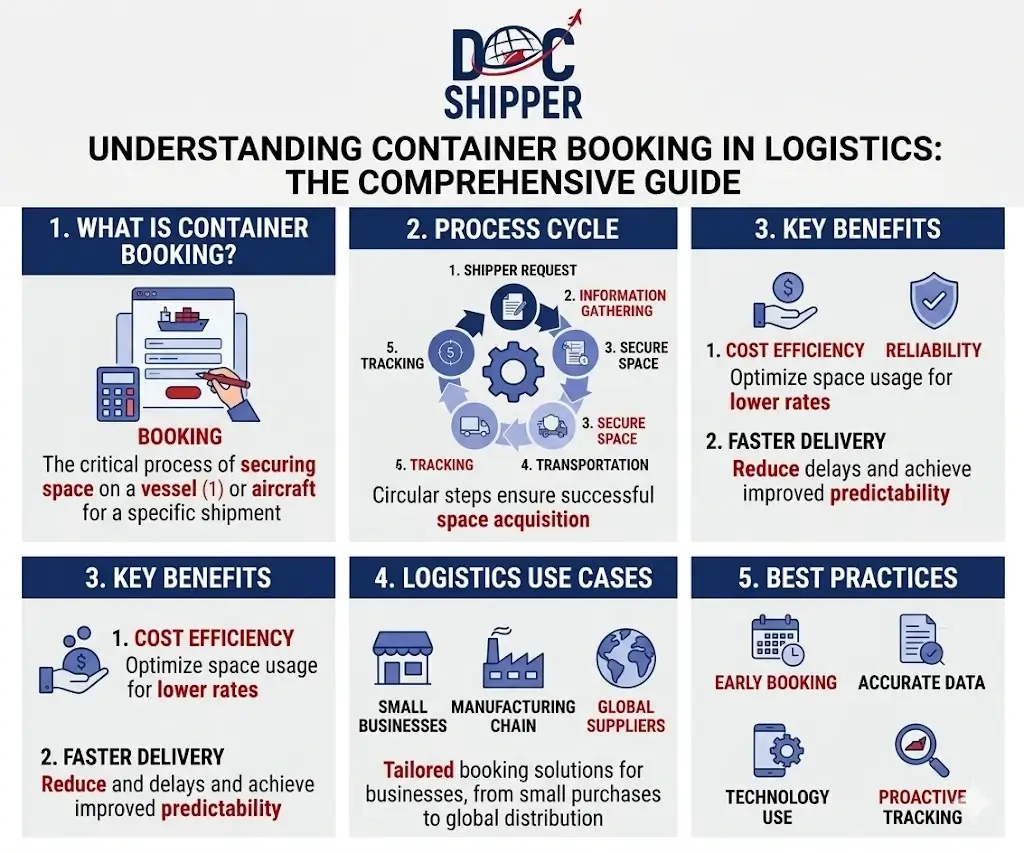
The container booking workflow involves multiple stakeholders and precise coordination. Understanding each phase prevents costly errors and ensures smooth cargo movement.
Booking request initiation: Shippers contact carriers or freight forwarders with shipment details including origin, destination, cargo volume, preferred sailing date, and container specifications. This initial communication establishes the foundation for the entire transaction.
Rate negotiation and confirmation: Carriers provide quotations based on current market rates, fuel surcharges, and additional fees. Service contracts or spot rates determine final pricing. At DocShipper, we leverage our carrier relationships to secure competitive rates and priority space allocation for our clients.
Booking confirmation number: Once accepted, carriers issue a unique booking reference number that tracks the reservation throughout the shipping cycle. This identifier links all subsequent documentation and communications.
Equipment release and pickup: After confirmation, the carrier releases empty containers at designated depots. Shippers must collect equipment within specified timeframes to avoid detention charges. The Equipment Interchange Receipt (EIR) documents container condition at pickup.
Cargo cut-off compliance: Maritime regulations require cargo delivery to terminals before vessel departure. Missing the VGM (Verified Gross Mass) deadline or documentation cut-off can result in rolled cargo—bumped to the next available sailing. According to IMO regulations, VGM submission is mandatory for all containerized shipments.
Amendment and cancellation policies: Changes to bookings often incur fees and require advance notice. Carriers enforce strict modification windows. Understanding these terms protects shippers from unexpected charges and operational disruptions.
Practical Examples & Market Data
Real-world scenarios illustrate how container booking strategies impact supply chain efficiency and costs.
Comparative Booking Scenarios
| Scenario | Booking Lead Time | Container Type | Average Cost Impact | Risk Level |
|---|---|---|---|---|
| Peak Season (Q4) | 3-4 weeks advance | 40ft HC | +35% vs. off-peak | High rollover risk |
| Contract Rate Booking | 1-2 weeks advance | 20ft Standard | Fixed rate (stable) | Low, guaranteed space |
| Spot Market Booking | 3-7 days advance | 40ft Standard | Variable (+/- 40%) | Medium, subject to availability |
| Reefer Cargo | 2-3 weeks advance | 40ft Reefer | +60% vs. dry container | High, limited equipment |
Use Case: Electronics Importer
A European electronics importer needed to ship 15 containers (40ft HC) from Shenzhen to Rotterdam. By booking 25 days before the preferred sailing date, they secured:
- Contract rate advantage: $2,800/container vs. $4,200 spot rate (33% savings)
- Guaranteed space: No rollover despite 95% vessel utilization
- Consolidated documentation: Single booking reference simplified customs clearance
- Transit time certainty: 28-day ocean transit with confirmed transshipment schedule
Key Market Insights
- Booking lead times: Industry averages show 14-21 days advance booking reduces costs by 18-25%
- Container shortages: 2020-2022 disruptions increased rollover rates to 15-20% on major trade lanes
- Digital platforms: Online booking systems now handle 40% of global container reservations, improving speed and transparency
- Blank sailings impact: Carriers canceling voyages can affect 8-12% of bookings during demand fluctuations
- Premium services: Priority booking options cost 10-15% more but guarantee space and faster transit
Conclusion
Container booking is the critical first step in maritime logistics that determines shipment success. Proper planning, early reservation, and understanding carrier requirements prevent delays and control costs.
Need expert assistance with your container bookings? Contact DocShipper for optimized shipping solutions and guaranteed space allocation.
📚 Quiz
Test Your Knowledge: Container Booking
Q1. What is the primary purpose of a container booking in international shipping?
Q2. A shipper misses the VGM (Verified Gross Mass) deadline for their booking. What is the most likely consequence?
Q3. A European importer needs to ship 15 containers from Shenzhen to Rotterdam during Q4 peak season. Which booking strategy best minimizes cost and rollover risk?
🎯 Your Result
📞 Free Quote in 24hFAQ | Container Booking: Definition, Process & Practical Examples
Essential details include shipper and consignee names, origin and destination ports, cargo description and weight, preferred sailing date, container type and quantity, and Incoterms. Accurate information prevents booking rejections and delays.
Standard practice recommends 14-21 days before the desired sailing date. Peak seasons require 3-4 weeks advance booking. Last-minute bookings risk higher rates and limited availability.
Yes, but amendments depend on carrier policies and timing. Changes made before cargo cut-off typically incur fees ranging from $50-$150. After cut-off, modifications may be impossible or require rebooking.
The cargo gets "rolled" to the next available sailing, causing delays of 3-7 days on average. Shippers may incur detention charges for holding empty containers and face disrupted delivery schedules.
Spot bookings use current market rates and depend on space availability. Contract bookings involve pre-negotiated rates with guaranteed space allocation over a specified period, providing cost stability and priority access.
Not mandatory, but forwarders provide valuable services including rate negotiation, documentation handling, and problem resolution. They consolidate shipments and often secure better rates through volume agreements with carriers.
Verified Gross Mass is the total weight of a packed container, required by IMO SOLAS regulations. Shippers must provide VGM before cargo loading to ensure vessel safety and proper stowage planning.
Blank sailings occur when carriers cancel scheduled voyages due to low demand or operational issues. Affected bookings are automatically transferred to alternative sailings, potentially causing 7-14 day delays.
Standard options include 20ft and 40ft dry containers, 40ft high cube, refrigerated (reefer) containers, open-top, flat rack, and tank containers. Specialized equipment requires earlier booking and costs 20-100% more than standard units.
Yes, major carriers accept direct bookings through online platforms or sales representatives. However, small shippers often receive better rates and service through freight forwarders who aggregate volumes and negotiate preferential terms.
Demurrage charges apply when containers remain at the port terminal beyond free time (typically 3-7 days). Detention charges occur when empty containers are not returned to the carrier within the agreed period after cargo delivery.
Use the booking reference number provided by the carrier to access online tracking systems. These platforms show vessel schedules, container locations, and estimated arrival times. Freight forwarders also provide regular status updates throughout the shipping cycle.
Need Help with
Logistics or Sourcing ?
First, we secure the right products from the right suppliers at the right price by managing the sourcing process from start to finish. Then, we simplify your shipping experience - from pickup to final delivery - ensuring any product, anywhere, is delivered at highly competitive prices.


Fill the Form
Prefer email? Send us your inquiry, and we’ll get back to you as soon as possible.
Contact us




