


In short ⚡
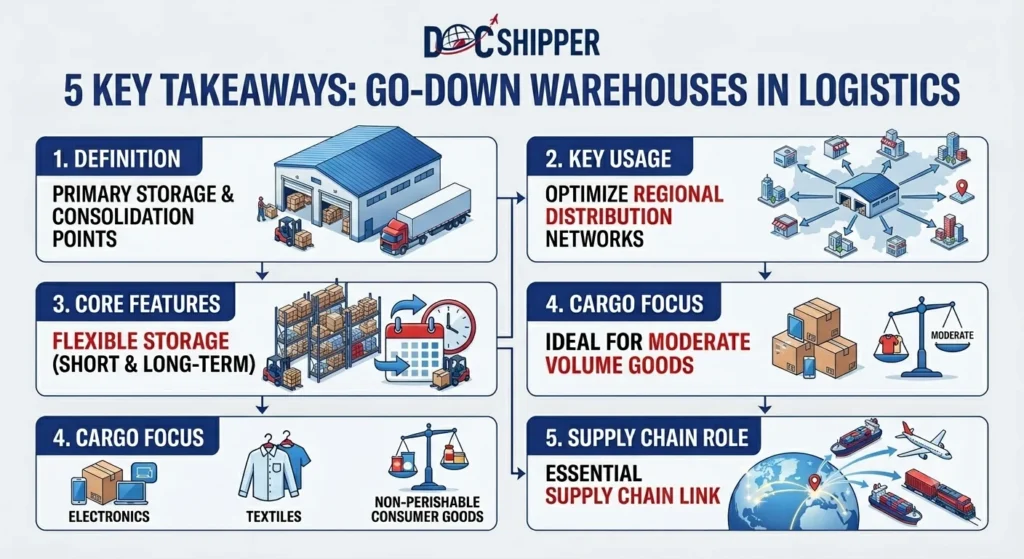
A go-down is a warehouse or storage facility used for temporarily storing goods before distribution or shipment. Primarily used in South Asian logistics terminology, it serves as a critical node in the supply chain, enabling inventory management, quality inspection, and consolidation. Understanding go-down operations is essential for optimizing import/export workflows and reducing storage costs.
Introduction
Many importers struggle with unexpected storage fees or customs delays because they underestimate the role of warehousing facilities. In international trade, the term “go-down” specifically refers to ground-level or basement storage spaces commonly found in India, Pakistan, Bangladesh, and other South Asian markets.
Unlike modern multi-story warehouses, go-downs traditionally emphasize accessibility and cost-efficiency for small to medium-sized businesses. They play a pivotal role in managing inventory flow, especially when dealing with customs clearance, quality control, or just-in-time delivery models.
Key characteristics of go-downs include:
- Ground-level access for easy loading and unloading
- Flexible rental terms suited for seasonal inventory fluctuations
- Proximity to ports or transport hubs reducing transit times
- Basic infrastructure with optional climate control or security upgrades
- Cost-effective alternative to bonded warehouses for non-duty goods
Types of Go-Downs & Operational Framework
Go-downs vary significantly based on ownership structure, regulatory status, and intended use. Understanding these distinctions helps importers select the right facility for their supply chain needs.
Private go-downs are owned by individual businesses for exclusive inventory management. They offer maximum control over storage conditions and security protocols, making them ideal for high-value or sensitive goods. However, they require substantial capital investment and ongoing maintenance costs.
Public go-downs operate on a rental basis, allowing multiple businesses to share space. These facilities provide flexibility for seasonal demand spikes or trial shipments without long-term commitments. Rates typically range from $2 to $8 per square meter monthly, depending on location and amenities.
Bonded go-downs function under customs supervision, enabling duty deferment until goods are cleared for domestic consumption. According to India’s Central Board of Indirect Taxes and Customs, bonded warehouses must maintain detailed records and comply with stringent security requirements.
Cold storage go-downs cater to perishable goods requiring temperature-controlled environments. These facilities are essential for pharmaceutical imports, fresh produce, or frozen foods, typically maintaining temperatures between -25°C to +15°C.
At DocShipper, we assist clients in selecting appropriate go-down facilities based on cargo characteristics, storage duration, and cost optimization strategies. Our network includes verified warehouses across Asia, ensuring compliance with local regulations and quality standards.
Practical Examples & Cost Comparisons
Real-world scenarios illustrate how go-down selection impacts overall logistics costs and operational efficiency. Consider these comparative cases from typical import operations.
Case Study: Electronics Importer in Mumbai
A European electronics company imports 500 cubic meters of consumer goods quarterly through Mumbai port. They evaluated three go-down options:
| Facility Type | Monthly Cost | Distance to Port | Security Level | Climate Control |
|---|---|---|---|---|
| Public Go-Down (Urban) | $2,400 | 8 km | Basic CCTV | None |
| Private Go-Down (Suburban) | $4,200 | 22 km | 24/7 Guards | Optional (+$800) |
| Bonded Go-Down (Port Area) | $3,600 | 2 km | Customs Approved | Humidity Control |
The company chose the bonded go-down, saving $18,000 annually in duty payments by deferring customs clearance until confirmed sales. Proximity to the port reduced transportation costs by 40% compared to suburban alternatives.
Key Decision Factors
- Storage duration: Short-term needs (under 30 days) favor public go-downs; long-term storage justifies private facilities.
- Cargo value: High-value goods require enhanced security, increasing costs by 20-35%.
- Customs status: Bonded facilities add compliance costs but enable duty optimization strategies.
- Location premium: Port-proximate facilities charge 15-25% more but reduce drayage expenses significantly.
- Seasonal flexibility: Public go-downs allow scaling storage space without capital commitment during peak seasons.
According to logistics industry data, businesses utilizing strategically located go-downs reduce total landed costs by an average of 8-12% compared to improvised storage solutions.
Conclusion
Go-downs remain a fundamental component of South Asian supply chains, offering flexible and cost-effective storage solutions for importers and exporters. Proper facility selection directly impacts inventory costs, customs efficiency, and delivery reliability.
Need expert guidance on warehouse selection and logistics optimization? Contact DocShipper today for tailored supply chain solutions.
📚 Quiz
Test Your Knowledge: Go-Down
What is the primary defining characteristic of a go-down in logistics terminology?
Which statement correctly describes bonded go-downs?
An electronics importer needs to store 500 cubic meters of consumer goods for 45 days near Mumbai port with potential customs clearance delays. Which facility type would be most appropriate?
🎯 Your Result
📞 Free Personalized QuoteFAQ | Go-Down: Definition, Types & Practical Examples in Logistics
While both terms describe storage facilities, "go-down" specifically refers to ground-level or basement storage spaces commonly used in South Asia. Warehouses can be multi-story facilities with advanced automation, whereas go-downs typically emphasize simplicity and cost-efficiency. The terminology reflects regional logistics practices rather than functional differences.
Rental rates vary by location, size, and amenities. In major Indian ports, expect $2-5 per square meter monthly for basic public go-downs, $6-10 for climate-controlled facilities, and $8-15 for bonded warehouses. Urban locations command 20-40% premiums over suburban alternatives. Additional charges may apply for handling, security, and insurance.
Yes, but only in customs-approved bonded go-downs. These facilities operate under regulatory supervision, allowing duty deferment until goods enter domestic commerce. Standard go-downs require customs clearance before storage. Using non-bonded facilities for uncleared cargo violates import regulations and risks penalties.
Typical requirements include business registration certificates, tax identification numbers, cargo insurance policies, and inventory declarations. Bonded go-downs additionally require customs authorization, bank guarantees, and compliance with warehousing regulations. Private go-downs may request financial statements for long-term contracts exceeding 12 months.
Storage duration depends on facility type and contractual terms. Public go-downs typically allow flexible monthly rentals without maximum limits. Bonded warehouses impose regulatory time limits—usually 90 days to 3 years depending on jurisdiction—after which duties become payable or goods face auction. Always verify specific regulations with local customs authorities.
Basic go-downs lack climate control and suit only ambient-stable goods like textiles, machinery, or packaged consumer products. Pharmaceuticals, chemicals, or perishables require specialized cold storage go-downs with temperature monitoring, backup power, and compliance certifications. Expect 60-150% cost premiums for controlled environments.
Standard facilities offer basic perimeter fencing and occasional patrols. Enhanced options include 24/7 CCTV surveillance, biometric access controls, security guards, and alarm systems. High-value cargo storage may require additional insurance-mandated security protocols. Always conduct facility audits before committing to rental agreements.
Access policies vary by facility type. Private go-downs typically allow unrestricted owner access during business hours. Public facilities require advance notice and may charge handling fees. Bonded go-downs mandate customs supervision for all movements, restricting spontaneous access. Clarify access terms in rental contracts to avoid operational delays.
Proximity to ports reduces drayage expenses significantly—facilities within 5 km can save 30-50% on transportation versus suburban locations 20+ km away. However, port-area rents run 20-35% higher. The optimal balance depends on storage duration, cargo turnover rates, and delivery schedules. Calculate total landed costs including both rent and transport.
Comprehensive cargo insurance should cover storage risks including fire, theft, water damage, and facility liability. Standard policies exclude certain perils like war, strikes, or improper storage conditions. Bonded warehouses may require additional customs bond insurance. Verify that facility insurance complements rather than duplicates your cargo coverage.
Many modern go-downs offer labeling, packaging, quality inspection, and consolidation services. Bonded facilities may handle customs documentation and duty payments. Advanced operators provide inventory management systems and just-in-time delivery coordination. Value-added services typically cost 5-15% extra but streamline supply chain operations considerably.
Request facility licenses, customs approvals, and safety certifications. Conduct physical inspections assessing structural integrity, pest control, drainage systems, and fire safety equipment. Check references from existing clients and verify insurance adequacy. Reputable logistics providers like DocShipper maintain audited networks of verified go-down facilities across major trade routes.
Need Help with
Logistics or Sourcing ?
First, we secure the right products from the right suppliers at the right price by managing the sourcing process from start to finish. Then, we simplify your shipping experience - from pickup to final delivery - ensuring any product, anywhere, is delivered at highly competitive prices.


Fill the Form
Prefer email? Send us your inquiry, and we’ll get back to you as soon as possible.
Contact us




