


In short ⚡
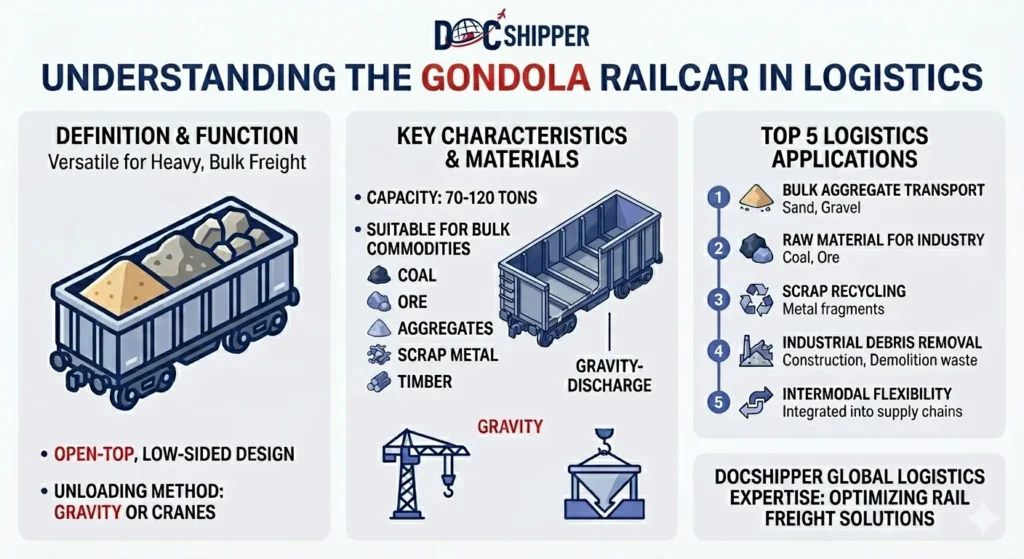
A gondola is a low-sided, open-top railcar designed to transport heavy or bulky cargo that doesn't require protection from weather. Widely used in international freight for raw materials like steel, coal, and construction materials, gondolas offer versatility and cost-efficiency for shippers handling non-perishable goods across rail networks.
Introduction
Many importers mistakenly assume that all rail freight requires covered containers. This misconception leads to unnecessary costs when shipping materials that can safely travel exposed to elements. Understanding when and how to use gondola cars can reduce logistics expenses by 15-30% for specific cargo types.
In global supply chains, gondolas represent a critical link between extraction sites and manufacturing facilities. Their design maximizes payload capacity while minimizing tare weight, making them essential for cost-effective bulk transportation across continental distances.
Key characteristics include:
- Open construction allowing top-loading and unloading with cranes or conveyors
- Reinforced flooring to support concentrated loads up to 286,000 pounds gross weight
- Drop-end or rotary designs for efficient discharge of granular materials
- Weathering tolerance suitable for ores, scrap metal, aggregates, and timber
- Intermodal compatibility with port facilities and transloading operations
Technical Specifications & Operational Expertise
Gondola cars operate within strict dimensional and weight parameters defined by the Association of American Railroads (AAR). Standard models measure 52-66 feet in length with sidewall heights ranging from 42 to 72 inches, depending on cargo density requirements.
The payload optimization principle dictates that shippers must balance cube utilization against weight restrictions. A typical 52-foot gondola offers 2,900 cubic feet of capacity but cannot exceed the 263,000-pound net load limit on standard rail networks. This creates strategic considerations for materials with varying densities.
Three primary gondola variants serve distinct functions. Fixed-side gondolas feature permanent sidewalls and require overhead unloading equipment. Drop-end gondolas incorporate hinged endgates that allow material to flow out when tilted on specialized tracks. Rotary gondolas enable complete inversion at dumping facilities, ideal for coal and ore shipments to power plants or smelters.
Corrosion resistance determines service life and maintenance costs. Modern gondolas utilize high-tensile steel alloys with protective coatings, extending operational lifespans to 30-40 years under normal conditions. For abrasive materials like iron ore, reinforced liners prevent premature wear of the car body.
Customs and cross-border considerations impact gondola movements significantly. When transitioning between rail gauge systems (such as North American standard gauge to Russian broad gauge), transloading becomes necessary. At DocShipper, we coordinate these transfers to ensure seamless multimodal routing, preventing detention charges and cargo exposure during handling.
The liability framework for open-top rail transport differs from enclosed shipping. Carriers typically exclude weather-related damage claims for gondola shipments unless specific tariff provisions apply. Shippers must verify cargo insurance covers environmental exposure and secure adequate load restraints to prevent shifting during transit.
Concrete Examples & Industry Data
Real-world applications demonstrate gondola efficiency across industries. A European steel manufacturer reduced transportation costs by €180,000 annually by switching from containerized shipments to gondola cars for coil steel movements between Germany and Poland. The transition eliminated container rental fees and improved loading cycle times by 40%.
Consider this comparative scenario for a 500-ton scrap metal shipment from Chicago to a Tennessee smelter:
| Transport Method | Equipment Required | Transit Time | Cost per Ton |
|---|---|---|---|
| Covered Boxcars | 14 cars + tarping | 5-6 days | $82 |
| Gondola Cars | 10 gondolas | 4-5 days | $58 |
| Truck Fleet | 25 flatbed trucks | 2-3 days | $145 |
The gondola option saves $12,000 compared to boxcars while reducing equipment needs. Though slower than trucking, the cost differential of $43,500 makes rail economically superior for non-urgent bulk shipments.
Mining operations showcase gondola versatility. An Australian iron ore producer transports 120 million tons annually using dedicated gondola fleets between Pilbara mines and Port Hedland. Rotary-dump gondolas enable 90-second unloading cycles, supporting vessel loading rates exceeding 10,000 tons per hour.
Environmental considerations increasingly influence gondola selection. A Canadian forestry company achieved a 35% carbon footprint reduction by consolidating timber shipments into unit trains of 100+ gondolas rather than truck convoys. This shift aligned with corporate sustainability targets while improving delivery predictability.
Key decision factors for gondola utilization include:
- Material weatherability: Cargo must tolerate moisture, temperature fluctuations, and dust exposure
- Destination infrastructure: Receiving facilities need overhead cranes, conveyors, or rotary dumpers
- Volume consistency: Regular shipments justify dedicated car leasing versus spot market rates
- Regulatory compliance: Hazardous materials require specific gondola certifications and placarding
- Route optimization: Direct rail access eliminates costly drayage and transloading steps
At DocShipper, we analyze these variables to determine optimal railcar selection, negotiating fleet agreements that balance equipment availability with cost management across your supply network.
Conclusion
Gondola cars represent a specialized but essential component of global freight infrastructure, offering unmatched efficiency for bulk materials that don’t require environmental protection. Proper implementation requires understanding technical specifications, regulatory frameworks, and infrastructure compatibility.
Need expert guidance on railcar selection and multimodal logistics? Contact DocShipper for customized freight solutions tailored to your cargo characteristics and supply chain objectives.
📚 Quiz
Test Your Knowledge: Gondola Railcars
1. What defines a gondola railcar's primary design characteristic?
2. Which statement accurately describes gondola liability and insurance?
3. A steel manufacturer needs to ship 500 tons of coil steel 800 km. When should they choose gondola cars?
🎯 Your Results
📞 Free Quote in 24hFAQ | Gondola: Definition, Strategic Use & Concrete Examples in Logistics
Perishable goods, moisture-sensitive materials (electronics, paper products), fine powders prone to wind loss, and high-value items requiring theft protection should avoid gondola shipping. Temperature-controlled or covered equipment better serves these categories.
Monthly gondola lease rates range from $400-$800 per car depending on specifications and market conditions, approximately 60% less than comparable container leasing. However, limited flexibility and specialized handling requirements offset some cost advantages.
Border crossings depend on rail gauge compatibility and bilateral agreements. North American gondolas move freely between US, Canada, and Mexico under USMCA provisions. European gauge differences require transloading at border points like Brest (Belarus-Poland) or Finnish-Russian crossings.
Load securement follows AAR specifications requiring bulkhead restraints, chocking for heavy machinery, and tarpaulin coverage for fine materials. Overfill prevention systems ensure loads remain within sidewall height limits, typically 12 inches below the top edge.
Cargo policies for gondola shipments typically cost 15-25% more than enclosed transport due to weather-related risk. Insurers often exclude rust, oxidation, and moisture damage unless shippers purchase specialized all-risk coverage with higher deductibles.
Individual pieces cannot exceed gondola interior dimensions (typically 10 feet wide by 50-60 feet long). Height limitations depend on clearance routes—most North American lines accommodate loads up to 20 feet above rail. Dimensional approval from carriers prevents en-route obstructions.
Options include overhead gantry cranes, clamshell grabs, conveyor systems, rotary dumpers (inverting entire car), and drop-end discharge onto receiving hoppers. Selection depends on material flowability, facility infrastructure, and throughput requirements.
Advanced Car Movement (ACM) systems use GPS and RFID tagging to provide real-time visibility. Shippers access web portals showing empty car locations, estimated arrival times, and current utilization rates, enabling better fleet planning and reducing demurrage risks.
Yes, but only with proper DOT/Transport Canada certifications. Hazmat gondolas require specialized linings, placarding, and routing restrictions. Materials like contaminated soil or certain ores trigger additional regulatory documentation and carrier approval processes.
AAR Rule 88 mandates comprehensive inspections every 10 years, with interim safety checks at 1-year intervals. Lessees typically bear responsibility for routine maintenance (cleaning, minor repairs) while lessors handle structural overhauls and compliance certifications.
Winter freezing can bond materials to car floors, requiring steam thawing or vibration equipment. Summer heat expands metal components, potentially affecting door mechanisms. Shippers should schedule shipments considering destination climate and unloading infrastructure capabilities during extreme weather periods.
Flatcars with removable bulkheads, centerbeam cars for lumber, or specialized hopper cars for free-flowing materials serve as substitutes. For urgent shipments, intermodal containers on flatcars provide flexibility despite higher costs and reduced payload compared to dedicated gondola equipment.
Need Help with
Logistics or Sourcing ?
First, we secure the right products from the right suppliers at the right price by managing the sourcing process from start to finish. Then, we simplify your shipping experience - from pickup to final delivery - ensuring any product, anywhere, is delivered at highly competitive prices.


Fill the Form
Prefer email? Send us your inquiry, and we’ll get back to you as soon as possible.
Contact us




