


In short ⚡
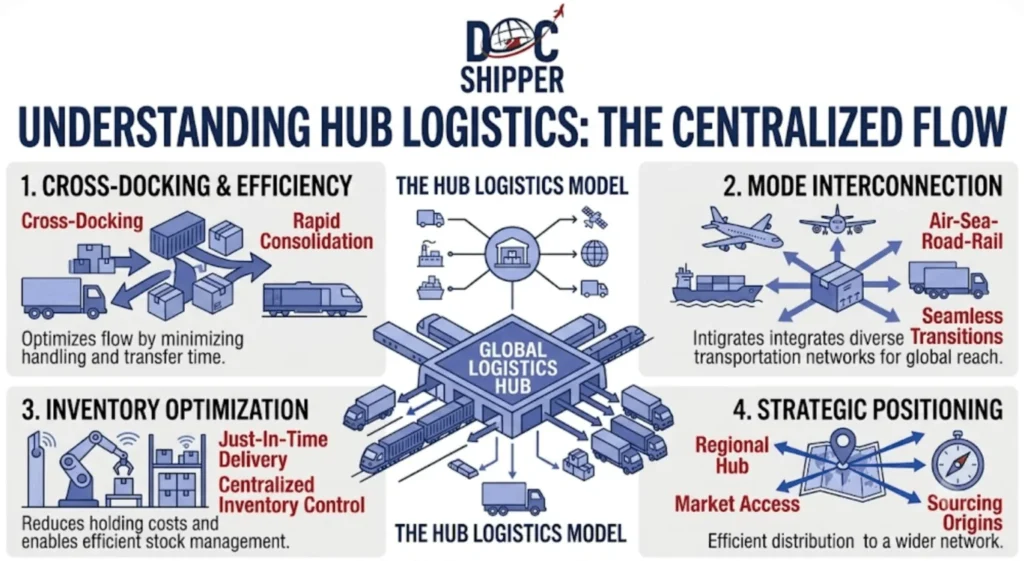
A hub is a centralized logistics facility that consolidates, sorts, and redistributes cargo from multiple origins to multiple destinations. It operates as the nerve center of transportation networks, enabling efficiency through economies of scale and optimized routing in global supply chains.
Introduction
Many importers confuse hubs with simple warehouses, losing valuable time and money in the process. This confusion stems from misunderstanding the dynamic role hubs play in modern logistics.
A hub functions as the strategic intersection point where goods from diverse suppliers converge before being redistributed to final destinations. This consolidation model revolutionized freight forwarding by reducing empty miles and optimizing load factors.
Understanding hub operations is crucial because:
- Cost optimization: Consolidation at hubs reduces per-unit transportation expenses by 30-40%
- Speed-to-market: Efficient sorting operations minimize handling time between origin and destination
- Network flexibility: Hub-and-spoke models enable rapid rerouting during disruptions
- Customs efficiency: Centralized inspection facilities accelerate clearance procedures
- Inventory management: Strategic positioning reduces safety stock requirements across the network
Hub Operations & Strategic Expertise
The functional architecture of a hub extends far beyond simple storage. Three operational models dominate international logistics.
Consolidation hubs aggregate smaller shipments from multiple suppliers into full container loads. This approach maximizes container utilization and reduces ocean freight costs. Legal requirements vary by jurisdiction—EU customs regulations mandate specific documentation for consolidated shipments under customs warehousing procedures.
Transshipment hubs facilitate mode changes and route optimization. Singapore, Rotterdam, and Dubai exemplify this model, handling containers that never enter the local market. These facilities operate under free trade zone status, enabling duty-free storage and processing.
Distribution hubs serve as final-mile preparation centers. Amazon’s fulfillment network represents this category, where goods are sorted, labeled, and dispatched for local delivery. Cross-docking operations minimize storage time, with products spending less than 24 hours in the facility.
Technology integration determines hub efficiency. Automated sorting systems process up to 20,000 parcels hourly, while warehouse management systems (WMS) orchestrate inventory movements in real-time. At DocShipper, we evaluate hub capabilities before selecting consolidation partners, ensuring your cargo moves through facilities equipped with tracking systems that provide shipment visibility.
Regulatory compliance shapes hub operations significantly. Authorized Economic Operator (AEO) certification grants preferential customs treatment, reducing inspection delays. Hub operators must maintain detailed records demonstrating security protocols and supply chain visibility to regulatory authorities.
Practical Examples & Data Analysis
Quantitative analysis reveals the tangible benefits of hub-centric logistics strategies. Consider these operational scenarios.
Cost Comparison: Direct Shipping vs. Hub Consolidation
| Shipping Method | Volume (CBM) | Cost per CBM | Transit Time | Total Cost |
|---|---|---|---|---|
| Direct Air Freight | 5 CBM | $450 | 3-5 days | $2,250 |
| Hub Consolidation (Air) | 5 CBM | $280 | 7-9 days | $1,400 |
| Direct LCL Ocean | 15 CBM | $95 | 28-35 days | $1,425 |
| Hub Consolidation (Ocean) | 15 CBM | $68 | 30-38 days | $1,020 |
The data demonstrates that consolidation through hubs reduces air freight costs by 38% on average, while ocean freight savings reach 28%. Transit time increases marginally, making this model ideal for non-urgent shipments.
Use Case: E-commerce Inventory Distribution
A European fashion retailer imports 500 SKUs quarterly from five Asian manufacturers. Previously, each supplier shipped directly to the retailer’s warehouse in Germany.
Previous model challenges:
- Five separate customs clearances multiplied administrative costs
- Inconsistent arrival times complicated inventory planning
- Small shipment volumes prevented negotiated freight rates
Hub-based solution implementation:
- All suppliers shipped to a consolidation hub in Hong Kong
- Single containerized shipment departed weekly to Rotterdam hub
- Final distribution occurred via trucking to Germany
Quantified results:
- Total logistics costs decreased by €87,000 annually (34% reduction)
- Customs processing time reduced from 12 days to 4 days
- Inventory forecasting accuracy improved through predictable weekly arrivals
- Carbon footprint decreased by 42% through optimized routing
Key Performance Indicators for Hub Selection
When evaluating hub facilities, prioritize these metrics:
- Throughput capacity: Minimum 50,000 TEU monthly for major distribution hubs
- Dwell time: Average cargo residence under 48 hours indicates operational efficiency
- Connectivity index: Direct connections to 100+ global destinations
- Technology adoption: Real-time tracking systems with API integration capabilities
- Customs clearance rate: Over 95% of shipments cleared without physical inspection
Conclusion
Hubs represent the backbone of modern logistics networks, transforming fragmented shipments into coordinated supply chains. Their strategic value lies in cost reduction, operational flexibility, and network resilience.
Need expert guidance on optimizing your logistics through strategic hub utilization? Contact DocShipper for tailored consolidation solutions.
📚 Quiz
Test Your Knowledge: Logistics Hubs
1. What is the primary operational difference between a hub and a traditional warehouse?
2. According to the data presented, what is the average cost reduction achieved through hub consolidation for air freight shipments?
3. A small importer shipping 8 CBM monthly from multiple Asian suppliers to Europe wants to reduce costs. Which statement correctly describes their hub consolidation opportunity?
🎯 Your Result
📞 Free Quote in 24hFAQ | Hub in Logistics: Definition, Types & Strategic Applications
A hub emphasizes rapid sorting and redistribution rather than long-term storage. Cargo spends hours or days in hubs versus weeks or months in warehouses. Hubs feature cross-docking facilities where inbound shipments immediately transfer to outbound vehicles without intermediate storage. Operational focus centers on throughput velocity rather than inventory management, with automation systems prioritizing speed over storage density.
Hubs operating in free trade zones allow goods to enter without immediate customs duties or taxes. Customs procedures activate only when cargo leaves the hub for domestic consumption. This status requires strict inventory controls, with authorities monitoring goods movement through bonded warehouse systems. Hub operators must maintain detailed electronic records accessible to customs agencies, demonstrating compliance with security and documentation standards.
Absolutely. Hub consolidation democratizes freight rates previously accessible only to large shippers. Small importers combine their shipments with others heading to similar destinations, achieving container load economies without full volume commitments. Freight forwarders like DocShipper manage consolidation schedules, allowing businesses to ship smaller quantities more frequently while maintaining cost efficiency comparable to full container loads.
This network design routes all shipments through central hubs rather than direct point-to-point connections. Cargo from multiple origins converges at the hub, then redistributes to final destinations. Airlines popularized this model—flights from smaller cities connect through major airports before reaching destinations. The approach reduces required routes from hundreds to dozens, optimizing asset utilization and enabling frequency increases on core hub connections.
Transshipment hubs enable route optimization impossible with direct shipping. A container from Shanghai to Rotterdam might transship through Singapore, utilizing high-volume trunk routes with lower per-container costs. Carriers consolidate cargo from multiple origins onto larger vessels on main lanes, then redistribute at regional hubs. This approach reduces empty positioning costs and maximizes vessel capacity utilization across the network.
Core systems include warehouse management software (WMS) for inventory tracking, transportation management systems (TMS) for route optimization, and automated sorting equipment with barcode scanning. Integration with customs platforms enables electronic documentation submission. Real-time visibility platforms provide shipment tracking to customers. Advanced facilities deploy robotics for picking operations and AI-driven predictive analytics for demand forecasting and capacity planning.
Dwell time varies by hub type and consolidation schedule. Air freight hubs process cargo within 6-24 hours. Ocean freight consolidation hubs operate on weekly or bi-weekly schedules, resulting in 3-10 day dwell times. Distribution hubs emphasize rapid turnover, with cross-docking operations completing in under 12 hours. Extended storage beyond scheduled departures incurs demurrage charges, incentivizing efficient cargo handling and timely documentation submission.
Primary risks include consolidation delays if co-loaded shipments arrive late, potential cargo damage during additional handling, and dependency on hub operator reliability. Customs holds at hubs can delay entire consolidated loads. Mitigation strategies include selecting financially stable hub operators with insurance coverage, negotiating service level agreements with penalty clauses, and maintaining shipment visibility through tracking systems. Diversifying across multiple hubs reduces single-point-of-failure exposure.
Emissions regulations increasingly influence hub positioning near intermodal facilities enabling rail connections. The EU's carbon border adjustment mechanism encourages hubs in low-emission jurisdictions. Port environmental programs like Green Marine certification attract shippers prioritizing sustainability. Future-focused hubs invest in electric vehicle charging infrastructure and renewable energy systems. Location near emission control areas (ECAs) affects vessel fuel costs and routing decisions for ocean freight consolidation.
Specialized hubs feature refrigerated storage zones maintaining specific temperature ranges for pharmaceuticals, food products, and chemicals. These facilities segregate temperature-sensitive cargo from general freight, operating dedicated cold chain infrastructure. Monitoring systems track temperature continuously, with automated alerts for deviations. Pharmaceutical hubs comply with GDP (Good Distribution Practice) standards, maintaining validation documentation for temperature-controlled zones throughout consolidation and distribution processes.
Essential documents include commercial invoices for each consignment, packing lists detailing contents, certificates of origin when claiming preferential tariffs, and consolidation manifests listing all shipments within the container. Customs declarations vary by jurisdiction but typically require HS codes and declared values. Hub operators issue master bills of lading covering the consolidated shipment, while individual house bills identify specific consignees. Electronic data interchange (EDI) systems streamline documentation submission.
During peak periods (typically Q3-Q4 for retail), hub capacity constraints emerge as volumes surge 40-60% above baseline. Space allocation prioritizes high-volume customers with contractual agreements. Spot market rates increase 25-50% reflecting capacity scarcity. Dwell times extend as processing queues lengthen. Strategic shippers book hub capacity months in advance, securing guaranteed space and negotiated rates. Alternative routing through less congested hubs offers cost savings despite potentially longer transit times.
Need Help with
Logistics or Sourcing ?
First, we secure the right products from the right suppliers at the right price by managing the sourcing process from start to finish. Then, we simplify your shipping experience - from pickup to final delivery - ensuring any product, anywhere, is delivered at highly competitive prices.


Fill the Form
Prefer email? Send us your inquiry, and we’ll get back to you as soon as possible.
Contact us




