


In short ⚡
The Internet is a global network of interconnected computers and servers that enables real-time data exchange, communication, and digital services worldwide. In international logistics, it revolutionizes supply chain visibility, automated tracking, and cross-border documentation management through cloud-based platforms and EDI systems.
Introduction
How did businesses track shipments before real-time visibility? The answer reveals why the Internet has become the backbone of modern logistics. What began as a military communication network has transformed into the critical infrastructure enabling global trade, instant documentation processing, and supply chain transparency.
In international freight forwarding, the Internet eliminated weeks-long communication delays, manual document handling, and opaque shipping processes. Today, every container movement, customs clearance, and warehouse operation relies on continuous Internet connectivity.
Key characteristics defining the Internet’s role in logistics:
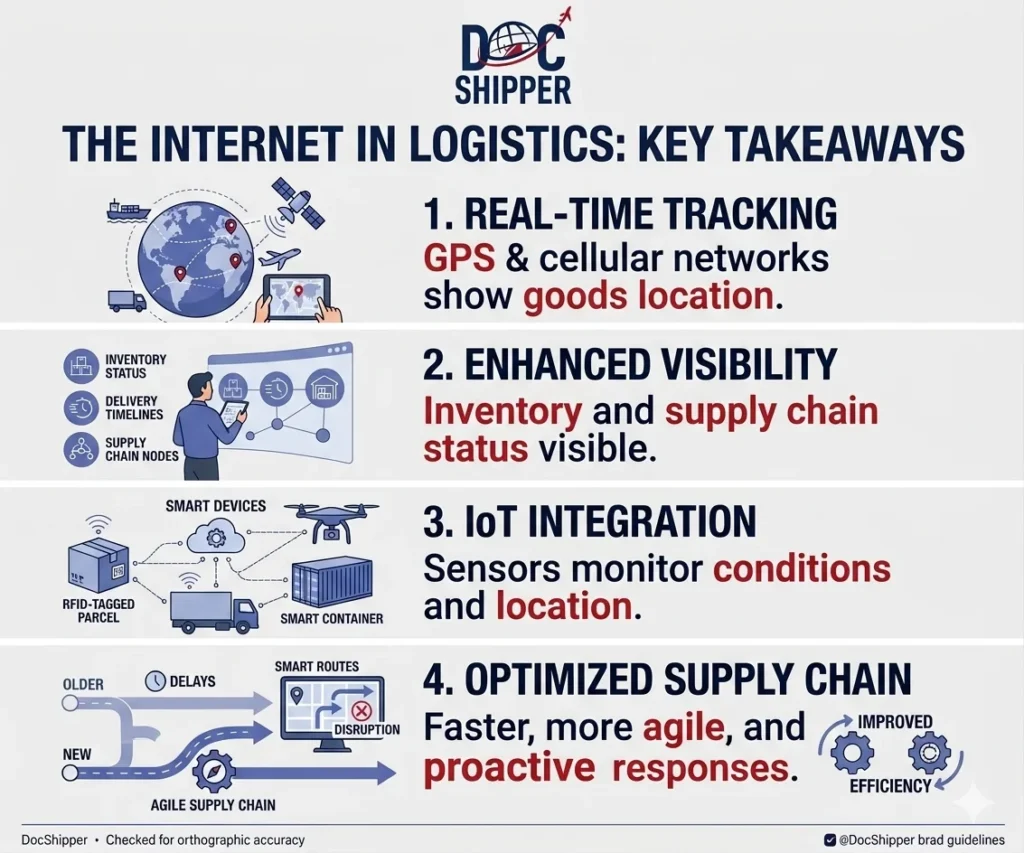
- Real-time tracking systems monitoring shipments across oceans and continents
- Cloud-based TMS platforms centralizing freight operations and documentation
- EDI protocols automating data exchange between shippers, carriers, and customs
- API integrations connecting disparate logistics systems seamlessly
- IoT connectivity enabling sensor-based cargo monitoring and predictive analytics
Internet’s Transformation of Logistics Operations
The Internet fundamentally restructured how international shipments are managed from booking to final delivery. Traditional logistics required physical documents, telephone negotiations, and fax confirmations. Digital connectivity replaced these processes with instant, automated workflows that reduce human error and accelerate transaction speed.
Electronic Data Interchange (EDI) systems exemplify this transformation. These standardized protocols allow shipping lines, freight forwarders, and customs authorities to exchange bills of lading, commercial invoices, and clearance documents without manual intervention. The World Customs Organization estimates EDI reduces clearance time by 40-60% compared to paper-based processes.
Cloud-based Transportation Management Systems (TMS) leverage Internet infrastructure to provide centralized visibility. These platforms aggregate data from multiple carriers, consolidate shipment tracking, and generate compliance documentation automatically. At DocShipper, we utilize cloud TMS solutions to provide clients with 24/7 access to their shipment status across air, ocean, and ground transport modes.
API ecosystems enable seamless integration between booking platforms, warehouse management systems, and customs brokers. Modern logistics requires connecting 10-15 different software systems per shipment. Internet-based APIs allow these systems to communicate instantly, eliminating data silos that previously caused delays and errors.
Mobile Internet connectivity extends operational control beyond office environments. Warehouse managers, truck drivers, and customs agents access real-time information through smartphones and tablets. This mobility reduces communication delays and enables immediate problem resolution during critical shipment phases.
Practical Applications & Data-Driven Insights
Quantifying the Internet’s impact reveals its indispensable role in competitive logistics operations. Industry data demonstrates how connectivity improvements directly correlate with cost reductions and service quality enhancements.
| Logistics Function | Pre-Internet Method | Internet-Enabled Method | Efficiency Gain |
|---|---|---|---|
| Shipment Tracking | Phone calls every 48h | Real-time GPS/RFID monitoring | 95% faster updates |
| Documentation | Courier physical papers (5-7 days) | Digital document exchange (minutes) | 99% time reduction |
| Rate Quotations | Manual requests (24-72h response) | Instant online quoting platforms | 85% faster decisions |
| Customs Clearance | Physical inspection queues | Pre-clearance via electronic filing | 50-70% faster processing |
| Inventory Management | Manual stock counts (weekly) | Cloud WMS with IoT sensors | 98% accuracy improvement |
Use Case: E-commerce Cross-Border Fulfillment
A European electronics retailer shipping 500 parcels daily to Asia-Pacific faced 12-day average delivery times with 18% documentation error rates. After implementing Internet-based solutions, results improved dramatically:
- Automated customs documentation via API integration reduced errors to 2%
- Real-time carrier optimization algorithms decreased transit time to 7 days
- Customer tracking portals reduced inquiry calls by 67%
- Cloud-based inventory sync prevented 95% of overselling incidents
- Total cost reduction of 23% annually through operational efficiencies
At DocShipper, we’ve observed that clients leveraging comprehensive Internet-based logistics platforms achieve 30-40% faster customs clearance and reduce documentation handling costs by approximately 25% compared to hybrid paper-digital workflows.
Conclusion
The Internet transformed international logistics from an opaque, document-heavy process into a transparent, automated ecosystem. Its role extends beyond communication—it’s the foundational infrastructure enabling real-time visibility, regulatory compliance, and competitive pricing in global trade.
Need expert guidance navigating Internet-enabled logistics solutions for your international shipments? Contact DocShipper for customized support across freight forwarding, customs clearance, and supply chain optimization.
📚 Quiz
Test Your Knowledge: Internet in International Logistics
What is the primary role of the Internet in international logistics?
How does Internet connectivity primarily reduce customs clearance time?
A client asks if Internet-based logistics tools are only beneficial for large corporations. What is the correct response?
🎯 Your Results
📞 Free Personalized QuoteFAQ | Internet: Definition, Impact & Concrete Examples in International Logistics
Internet-based electronic filing systems allow customs authorities to receive and process documentation before cargo arrives. Pre-clearance mechanisms, supported by EDI protocols and digital signature validation, eliminate physical paper handling. Advanced systems use risk assessment algorithms to expedite low-risk shipments, reducing inspection rates by 40-60% according to customs modernization programs.
Critical logistics systems implement redundant connectivity through multiple ISPs, satellite backup links, and offline operational modes. Modern TMS platforms cache essential data locally, allowing continued operations with delayed synchronization. However, prolonged outages halt real-time tracking, automated documentation, and EDI exchanges, reverting operations to manual processes with significant efficiency losses.
Cloud-based logistics platforms democratized access to enterprise-grade tools through subscription models. Small importers now utilize the same tracking APIs, customs filing systems, and rate comparison engines as multinational corporations. Many freight forwarders, including DocShipper, provide portal access to advanced tools regardless of shipment volume, leveling the competitive playing field.
Modern logistics platforms employ 256-bit encryption, TLS protocols, and blockchain verification for sensitive documents. Industry standards mandate compliance with GDPR, SOC 2, and ISO 27001 security frameworks. However, cybersecurity remains an ongoing challenge—logistics companies face 30% more cyberattacks than other sectors due to valuable supply chain data concentration.
Basic freight tracking requires minimal bandwidth (1-2 Mbps), but comprehensive operations demand higher capacity. Cloud TMS platforms function optimally with 10+ Mbps upload speeds for document scanning and real-time data synchronization. Warehouses using IoT sensors and video verification systems require 50+ Mbps. Mobile operations rely on 4G/5G cellular networks with latency under 100ms.
Digital connectivity enables dynamic pricing through real-time market data analysis. Shippers access instant rate comparisons across 50+ carriers, identifying cost savings of 15-25% versus traditional phone negotiations. Internet-based load optimization algorithms improve container utilization by 12-18%, directly reducing per-unit shipping costs through better capacity management.
Internet-enabled visibility platforms aggregate data from GPS trackers, port systems, and carrier networks into unified dashboards. Stakeholders monitor cargo location, temperature conditions, and delay predictions in real-time. Blockchain-based systems provide immutable audit trails for high-value goods, reducing fraud and enhancing accountability across multi-party supply chains.
Advanced logistics software integrates regulatory databases covering 190+ countries, automatically adapting documentation requirements based on origin, destination, and commodity codes. These systems update daily to reflect tariff changes, import restrictions, and certification requirements. However, complex scenarios still require human expertise to interpret nuanced regulations and resolve discrepancies.
While physical transit depends on carriers, Internet speed dramatically impacts pre-shipment and clearance phases. Slow connectivity delays booking confirmations, customs filings, and payment processing by 6-48 hours. High-speed Internet enables same-day documentation processing, reducing total door-to-door delivery time by 2-4 days for time-sensitive shipments through expedited clearance workflows.
Emerging technologies include 5G networks enabling real-time autonomous vehicle coordination, edge computing for instant AI-driven routing decisions, and satellite Internet providing connectivity in remote ports. Quantum encryption will secure high-value cargo data, while digital twins—virtual replicas of physical supply chains—will enable predictive optimization using Internet-connected sensors across global networks.
Modern platforms use middleware and API gateways to bridge cloud services with older enterprise systems. ETL (Extract, Transform, Load) processes convert legacy data formats into standardized protocols. Some systems maintain dual operations—cloud interfaces for external stakeholders while syncing with on-premise databases through scheduled Internet transfers, gradually migrating toward full cloud architecture.
Digital documentation eliminates approximately 180 million pages of paper annually in global shipping. Route optimization algorithms reduce fuel consumption by 8-15% through better load planning and traffic avoidance. Consolidated shipments enabled by Internet-based marketplaces decrease empty container movements by 20%, directly lowering carbon emissions across international transportation networks.
Need Help with
Logistics or Sourcing ?
First, we secure the right products from the right suppliers at the right price by managing the sourcing process from start to finish. Then, we simplify your shipping experience - from pickup to final delivery - ensuring any product, anywhere, is delivered at highly competitive prices.


Fill the Form
Prefer email? Send us your inquiry, and we’ll get back to you as soon as possible.
Contact us




