


In short ⚡
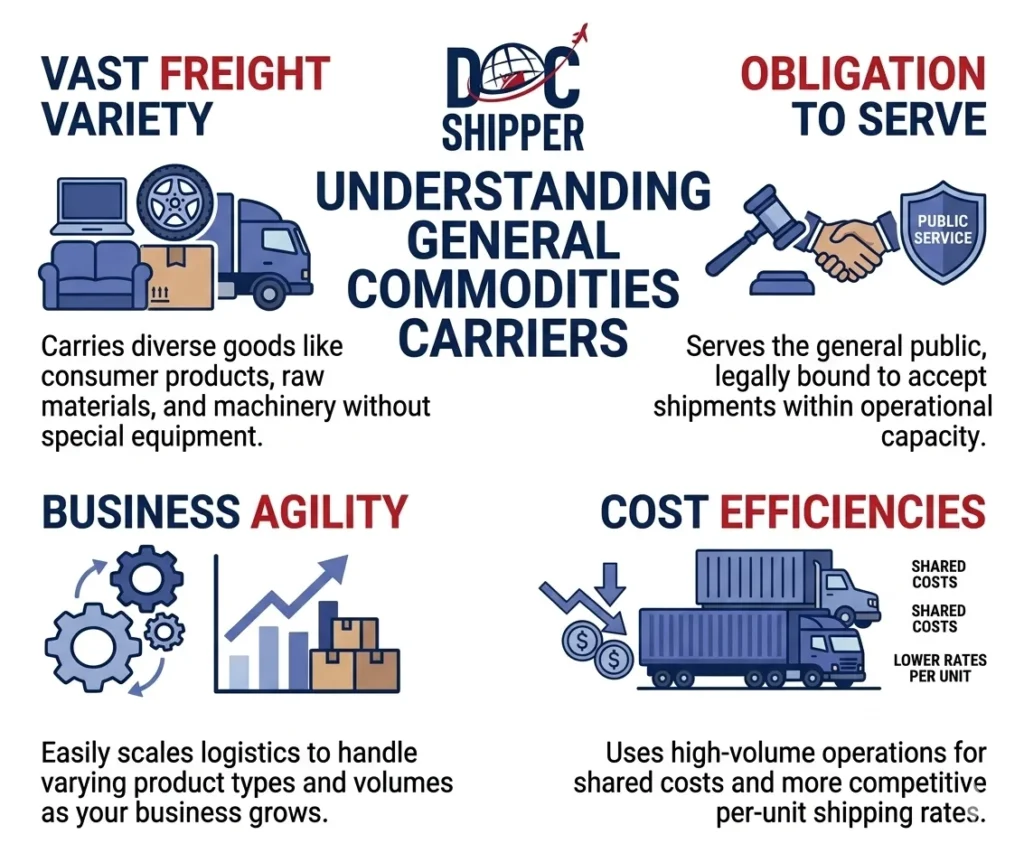
A General Commodities Carrier is a transportation company authorized to transport a wide variety of goods without specialization in any particular commodity type. Unlike specialized carriers restricted to specific cargo categories, these carriers handle diverse freight ranging from consumer goods to industrial materials, offering flexibility in logistics operations and multi-product consolidation for import/export shipments.Introduction
Businesses engaged in international trade frequently face a critical dilemma: Should they work with specialized carriers or opt for general commodity services? This decision directly impacts shipping costs, transit flexibility, and cargo consolidation opportunities.
General Commodities Carriers represent the backbone of diversified freight transportation, enabling companies to ship mixed cargo loads without navigating multiple carrier contracts. In global supply chains where product variety is the norm, understanding this carrier category becomes essential for operational efficiency.
Key characteristics include:
- Multi-product authorization covering non-hazardous and non-specialized goods
- Flexible routing options across various transportation modes (road, rail, sea, air)
- Consolidation capabilities allowing mixed shipments in single containers
- Regulatory compliance with general freight standards rather than specialized certifications
- Cost efficiency through shared space and optimized load planning
Operational Framework & Legal Implications
General Commodities Carriers operate under common carrier regulations established by transportation authorities in most jurisdictions. In the United States, the Federal Motor Carrier Safety Administration (FMCSA) defines their scope through operating authority classifications, while the European Union applies similar frameworks under EU transport regulations.
The licensing distinction separates general commodities from specialized categories like household goods carriers, refrigerated transport, or hazardous materials handlers. This classification determines insurance requirements, liability limits, and permissible cargo types. A general commodities carrier typically cannot transport explosives, flammable liquids, or temperature-sensitive pharmaceuticals without additional certifications.
Liability frameworks differ substantially from specialized carriers. General commodities operators assume responsibility based on weight-based valuation (typically $0.50-$0.60 per pound for domestic shipments) unless shippers purchase additional cargo insurance. This standard coverage often proves insufficient for high-value electronics or fragile merchandise.
The consolidation advantage represents their primary operational benefit. Companies shipping electronics, textiles, and machinery components can combine these items into a single container, splitting freight costs across product categories. At DocShipper, we regularly optimize mixed-commodity shipments, ensuring proper documentation and customs classification for each item category within consolidated loads.
From a customs perspective, general commodities shipments require precise HS code classification for each product type. Unlike specialized carriers handling uniform cargo, these carriers must process multiple tariff classifications, increasing documentation complexity but offering greater shipment flexibility. Proper customs brokerage becomes critical to avoid clearance delays.
Practical Applications & Industry Data
To illustrate the practical value of general commodities carriers, consider a mid-sized retailer importing from Southeast Asia. Their monthly shipments include furniture components, consumer electronics, and textile goods—three distinct product categories requiring different handling but not specialized transportation.
Use Case: Mixed Container Optimization
A European distributor sources the following monthly from China:
- 800 kg of electronic accessories (HS Code 8517)
- 1,200 kg of cotton apparel (HS Code 6109)
- 2,000 kg of plastic household items (HS Code 3924)
Using a general commodities carrier, all products ship in one 40-foot container (typical capacity: 26,000 kg). The consolidated freight cost averages $3,200, versus $4,800 if shipping three separate specialized loads. This 33% cost reduction directly improves margin competitiveness.
| Carrier Type | Cargo Flexibility | Average Cost/Container | Documentation Complexity |
|---|---|---|---|
| General Commodities Carrier | High (mixed products) | $3,200 | Moderate (multiple HS codes) |
| Specialized Electronics Carrier | Low (electronics only) | $1,800 | Low (single category) |
| Refrigerated Carrier | Very Low (perishables only) | $4,500 | High (temperature logs required) |
According to industry data, 68% of small-to-medium importers utilize general commodities carriers for their primary shipments, valuing flexibility over specialized handling. The remaining percentage typically deals with temperature-sensitive or hazardous materials requiring certified transport.
Key selection criteria for businesses:
- Cargo diversity – More than three product categories favor general carriers
- Volume thresholds – Shipments below 10 containers/month rarely justify specialized contracts
- Regulatory requirements – Standard goods avoiding FDA, USDA, or hazmat classifications
- Transit time flexibility – General carriers often operate consolidated routing with longer but cost-effective schedules
- Insurance needs – High-value cargo may require supplemental coverage beyond carrier liability
At DocShipper, our logistics consultants evaluate cargo profiles to determine optimal carrier selection, balancing cost efficiency with delivery reliability for each client’s specific product mix.
Conclusion
General Commodities Carriers provide essential flexibility for businesses managing diversified product portfolios in international trade. Their ability to consolidate mixed cargo reduces costs while maintaining regulatory compliance across multiple commodity categories.
Need expert guidance on carrier selection for your import/export operations? Contact DocShipper for customized logistics solutions tailored to your cargo profile.
📚 Quiz
Test Your Knowledge: General Commodities Carrier
What is the primary defining characteristic of a General Commodities Carrier?
Can a General Commodities Carrier legally transport hazardous materials without additional certification?
A European distributor needs to ship electronics, textiles, and plastic goods from China in one container. Which carrier type offers the most cost-efficient solution?
🎯 Your Results
📞 Free Personalized QuoteFAQ | General Commodities Carrier: Definition, Role & Practical Examples
Need Help with
Logistics or Sourcing ?
First, we secure the right products from the right suppliers at the right price by managing the sourcing process from start to finish. Then, we simplify your shipping experience - from pickup to final delivery - ensuring any product, anywhere, is delivered at highly competitive prices.


Fill the Form
Prefer email? Send us your inquiry, and we’ll get back to you as soon as possible.
Contact us




