


In short ⚡
Global Maritime Intelligence Integration (GMII) is a comprehensive framework combining real-time data analytics, satellite tracking, and artificial intelligence to create unified visibility across international shipping operations. This system aggregates vessel movements, port congestion, weather patterns, and regulatory compliance data into a single operational intelligence platform for optimized supply chain decision-making.
Introduction
Global supply chains lose $15 billion annually due to information silos and delayed maritime intelligence. Fragmented tracking systems, incompatible data formats, and reactive decision-making create blind spots that cost importers time and money.
GMII addresses this challenge by consolidating previously isolated data streams into actionable intelligence. For freight forwarders, customs brokers, and logistics managers, this integration transforms reactive problem-solving into proactive supply chain orchestration.
Key characteristics of effective GMII systems include:
- Multi-source data aggregation: AIS vessel tracking, port terminal systems, customs databases, and weather services
- Predictive analytics: Machine learning algorithms forecasting delays, congestion, and route optimization
- Real-time alerting: Automated notifications for vessel deviations, customs holds, or regulatory changes
- Collaborative platforms: Shared visibility between shippers, carriers, and consignees
- Regulatory compliance modules: Integration with customs pre-clearance and sanction screening systems
The strategic value lies in converting raw maritime data into competitive advantage through faster response times and reduced uncertainty.
Technical Architecture & Strategic Implementation
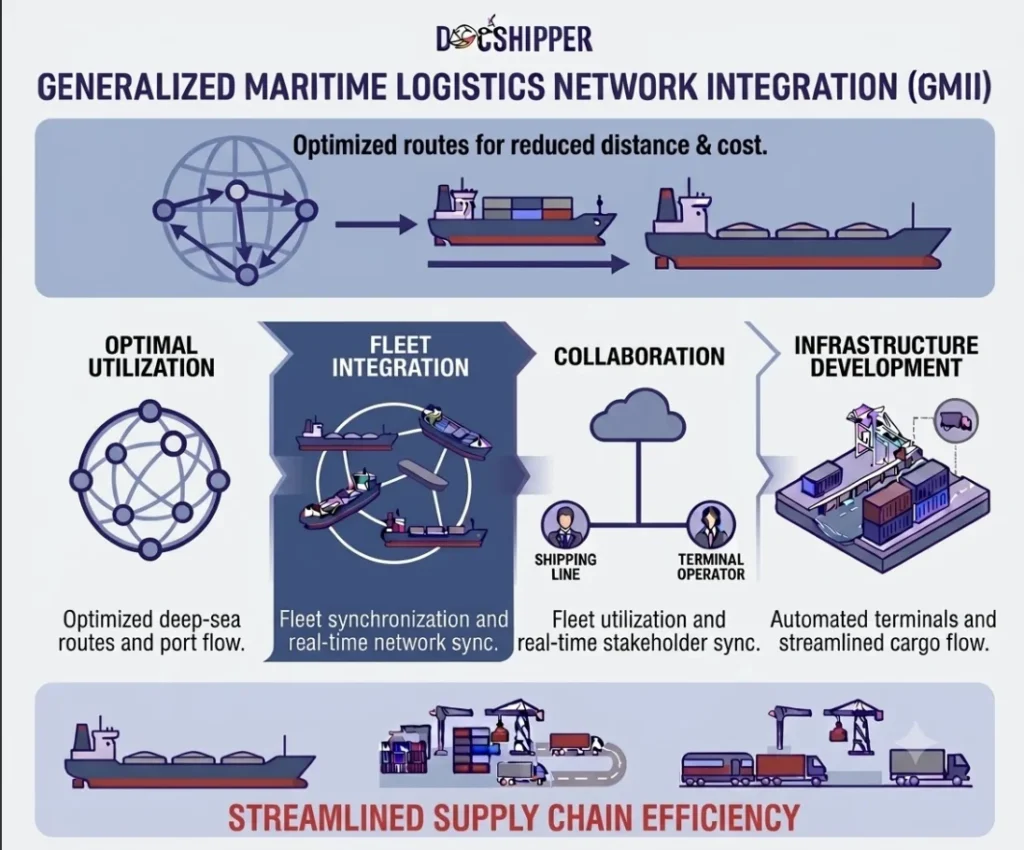
GMII platforms operate through layered data integration architecture that connects satellite-based Automatic Identification Systems (AIS) with Electronic Data Interchange (EDI) feeds from carriers and port authorities. This creates a unified data lake accessible through API-driven dashboards.
The technical foundation includes five core components. Data acquisition layers collect information from global vessel tracking networks, including over 3,000 coastal AIS stations and satellite constellations. Normalization engines standardize disparate data formats into common schemas compatible with enterprise resource planning (ERP) systems.
Analytical processing modules apply algorithms to identify patterns such as historical port dwell times, seasonal congestion trends, and carrier performance benchmarks. These systems can predict arrival windows with 95% accuracy up to 72 hours in advance.
Exception management protocols trigger alerts when deviations occur. If a container vessel diverts from its planned route or a port closes unexpectedly, stakeholders receive immediate notifications with alternative routing suggestions.
Regulatory integration represents the fifth pillar. GMII systems connect with customs pre-clearance platforms like the U.S. Automated Commercial Environment (ACE) or the EU’s Import Control System 2 (ICS2), enabling pre-arrival compliance verification. According to European Commission customs data, integrated pre-filing reduces clearance times by 40-60%.
At DocShipper, we leverage GMII capabilities to monitor client shipments across 100+ trade lanes simultaneously, identifying potential delays before they impact delivery schedules. Our systems integrate customs documentation workflows with vessel tracking, ensuring compliance documents reach authorities before cargo arrives.
Implementation challenges include data quality governance, as maritime information often contains errors or delays from source systems. Successful deployments require validation protocols that cross-reference multiple data sources. Organizations also face integration complexity when connecting legacy transportation management systems (TMS) with modern GMII platforms.
Concrete Use Cases & Performance Data
Consider a European electronics importer receiving monthly container shipments from Shenzhen, China. Without GMII, they relied on carrier websites updated every 24-48 hours, creating uncertainty about production planning.
After implementing GMII integration, the company gained hourly vessel position updates combined with predictive analytics on port congestion. When their vessel encountered unexpected delays at Singapore’s transshipment hub, the system automatically calculated revised ETAs and suggested air freight alternatives for time-sensitive components.
The financial impact was measurable. The importer reduced safety stock levels by 22% because accurate arrival predictions eliminated buffer inventory. Their customs broker received pre-arrival notifications 5 days earlier, accelerating clearance by 3 business days on average.
| Metric | Pre-GMII | Post-GMII | Improvement |
|---|---|---|---|
| ETA Prediction Accuracy | 68% | 94% | +26% |
| Customs Clearance Time | 7.2 days | 4.1 days | -43% |
| Inventory Holding Costs | $420K/year | $328K/year | -22% |
| Demurrage/Detention Fees | $58K/year | $12K/year | -79% |
Another scenario involves a pharmaceutical company managing temperature-controlled shipments. Their GMII system integrated IoT sensor data from refrigerated containers with vessel tracking and weather forecasting. When a tropical storm threatened their route through the Caribbean, the platform recommended rerouting through the Panama Canal, preserving cargo integrity.
For customs compliance, GMII proves invaluable. A U.S. importer of automotive parts integrated their system with ACE and partner government agencies. The platform automatically cross-referenced harmonized tariff codes against regulatory databases, identifying required certifications (EPA, DOT, FMVSS) before shipment departure. This proactive approach eliminated 91% of customs holds related to missing documentation.
Key performance indicators across industries show:
- Transit time visibility: 95%+ of shipments tracked with sub-24-hour update frequency
- Exception resolution speed: Average response time reduced from 18 hours to 3.5 hours
- Supply chain cost reduction: 8-15% decrease in total landed costs through optimized routing and reduced expediting
- Compliance accuracy: 99.2% documentation correctness rates on first submission
- Stakeholder satisfaction: 40% improvement in delivery predictability scores
DocShipper’s GMII implementation for a client importing textiles from Bangladesh to Canada demonstrated ROI within 4 months. We integrated customs pre-clearance, vessel tracking, and warehouse management systems, reducing total order cycle time by 11 days while improving forecast accuracy to 97%.
Conclusion
Global Maritime Intelligence Integration transforms fragmented shipping data into competitive advantage. Organizations implementing GMII achieve measurable improvements in cost reduction, compliance accuracy, and supply chain resilience.
Need expert guidance on integrating maritime intelligence into your logistics operations? Contact DocShipper for customized GMII implementation strategies tailored to your supply chain requirements.
📚 Quiz
Test Your Knowledge: Global Maritime Intelligence Integration
What is the primary purpose of Global Maritime Intelligence Integration (GMII)?
Which statement correctly describes GMII's approach to customs compliance?
A pharmaceutical company needs to protect temperature-sensitive cargo during a tropical storm. How would GMII support this scenario?
🎯 Your Result
📞 Free Quote in 24hFAQ | Global Maritime Intelligence Integration (GMII): Definition, Implementation & Concrete Examples
GMII platforms aggregate Automatic Identification System (AIS) satellite feeds, port terminal operating systems, carrier EDI messages, customs databases, weather services, and IoT sensor data from containers. Advanced systems also incorporate trade finance platforms, freight rate indices, and geopolitical risk assessments for comprehensive visibility.
By integrating vessel tracking with customs pre-clearance systems, GMII enables documentation submission before cargo arrival. The platform validates HS codes, identifies required permits, and flags potential compliance issues 5-7 days earlier than traditional workflows, reducing clearance delays by 40-60% on average.
Standard implementations require 8-16 weeks depending on existing IT infrastructure. This includes data source integration (3-4 weeks), system configuration (2-3 weeks), user training (1-2 weeks), and pilot testing (2-4 weeks). Organizations with modern APIs and cloud-based TMS can accelerate deployment to 6-10 weeks.
Yes, modern GMII platforms use RESTful APIs and standard EDI protocols compatible with SAP, Oracle, Microsoft Dynamics, and specialized TMS like Cargowise or Freightos. Integration typically involves middleware layers that translate GMII data into formats consumable by legacy systems without requiring core system modifications.
Leading GMII systems predict vessel arrival times with 92-96% accuracy within 72-hour windows. Port dwell time predictions reach 85-90% accuracy, while customs clearance duration forecasts achieve 80-88% precision. Accuracy improves with historical data accumulation and machine learning model refinement over 6-12 months.
Enterprise GMII platforms implement AES-256 encryption for data transmission and storage, role-based access controls, and SOC 2 Type II compliance. For GDPR adherence, systems anonymize personally identifiable information while maintaining operational data integrity. Many providers offer private cloud deployments for sensitive industries like defense or pharmaceuticals.
Typical returns include 15-25% reduction in inventory holding costs through improved forecast accuracy, 30-50% decrease in demurrage and detention fees via proactive container management, 8-12% savings in expedited freight through better planning, and 5-10% reduction in customs penalties. Total ROI typically ranges from 200-400% within the first year.
Advanced GMII platforms extend beyond maritime to track air cargo, rail, and trucking through integrated GPS systems and carrier APIs. This multimodal capability provides end-to-end visibility from factory gate to final delivery, particularly valuable for breakbulk shipments combining ocean and inland transportation modes.
GMII analytics process historical vessel arrival patterns, current berth occupancy data, labor availability reports, and seasonal volume trends to forecast congestion 7-14 days ahead. These predictions inform routing decisions, allowing shippers to redirect cargo to alternative ports or adjust inventory strategies before delays materialize.
AI algorithms analyze millions of historical shipment records to identify patterns invisible to human analysis. Machine learning models predict delays based on factors like carrier performance, weather conditions, and geopolitical events. Natural language processing extracts insights from unstructured data sources like port notices and regulatory updates, automatically flagging relevant information.
Modern GMII platforms calculate CO2 emissions based on actual vessel routes, speed, fuel type, and cargo weight. These systems integrate with IMO databases and carrier sustainability reports to provide Scope 3 emissions data required for ESG compliance. Some platforms suggest lower-emission routing alternatives or modal shifts to reduce environmental impact.
GMII platforms cross-reference shipment details against denied party lists, sanctions databases (OFAC, UN, EU), and export control regulations (EAR, ITAR). Automated screening occurs at booking, departure, and arrival stages, flagging potential violations before they result in penalties. Systems also track regulatory changes across 190+ countries, alerting users to new compliance requirements.
Need Help with
Logistics or Sourcing ?
First, we secure the right products from the right suppliers at the right price by managing the sourcing process from start to finish. Then, we simplify your shipping experience - from pickup to final delivery - ensuring any product, anywhere, is delivered at highly competitive prices.


Fill the Form
Prefer email? Send us your inquiry, and we’ll get back to you as soon as possible.
Contact us




:%20Definition,%20Implementation%20&%20Concrete%20Examples)