2026 Supply Chain Landscape: Market Overview
Importers should prepare for tighter capacity and rising freight rates amid ongoing trade disruptions. U.S. imports are growing faster than GDP despite tariffs, with East Coast ports gaining share. Logistics trends 2026 include a focus on nearshoring, with Mexico’s role strengthening in sectors like automotive and electronics. Sustainability regulations, such as EU’s Fit for 55, will demand greener practices. This importers guide emphasizes building agile networks to mitigate risks in the 2026 supply chain.
What importers need to know about 2026 logistics
Importers must prioritize agility in 2026 logistics trends as global trade faces ongoing volatility from tariffs and regulatory changes. Logistics trends 2026 emphasize multimodal orchestration, with AI-powered platforms enabling seamless shifts between air, sea, and rail to mitigate risks. In North America, warehouse utilization is expected to exceed 85.5%, signaling tighter capacity and the need for strategic inventory placement.
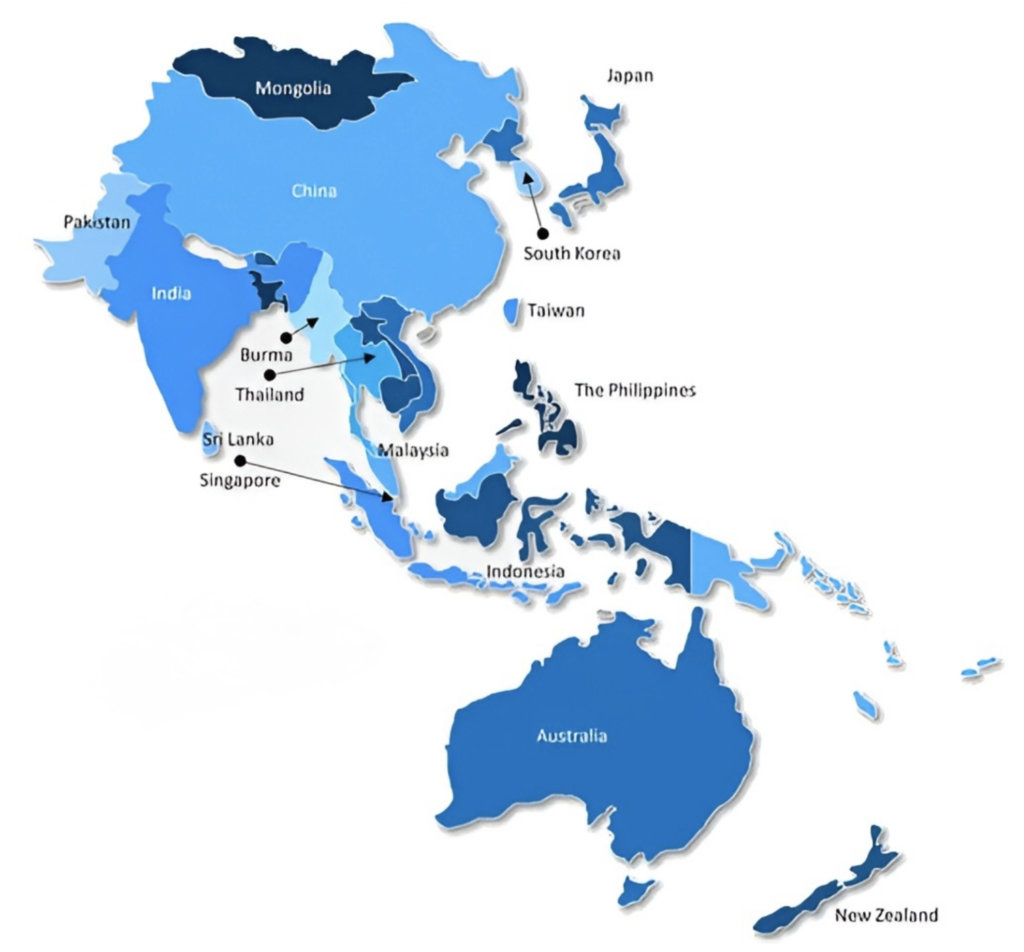
For importers, key takeaways include investing in sustainable practices, as EU regulations like Fit for 55 demand emissions reductions. Asia-Pacific’s massive automation push offers opportunities for cost savings but requires robust risk management. Overall, the 2026 supply chain demands that importers integrate technology for better visibility and efficiency, ensuring competitiveness in a market where e-commerce growth continues to reshape demand patterns.
Top 7 Supply Chain Trends Importers Must Watch in 2026
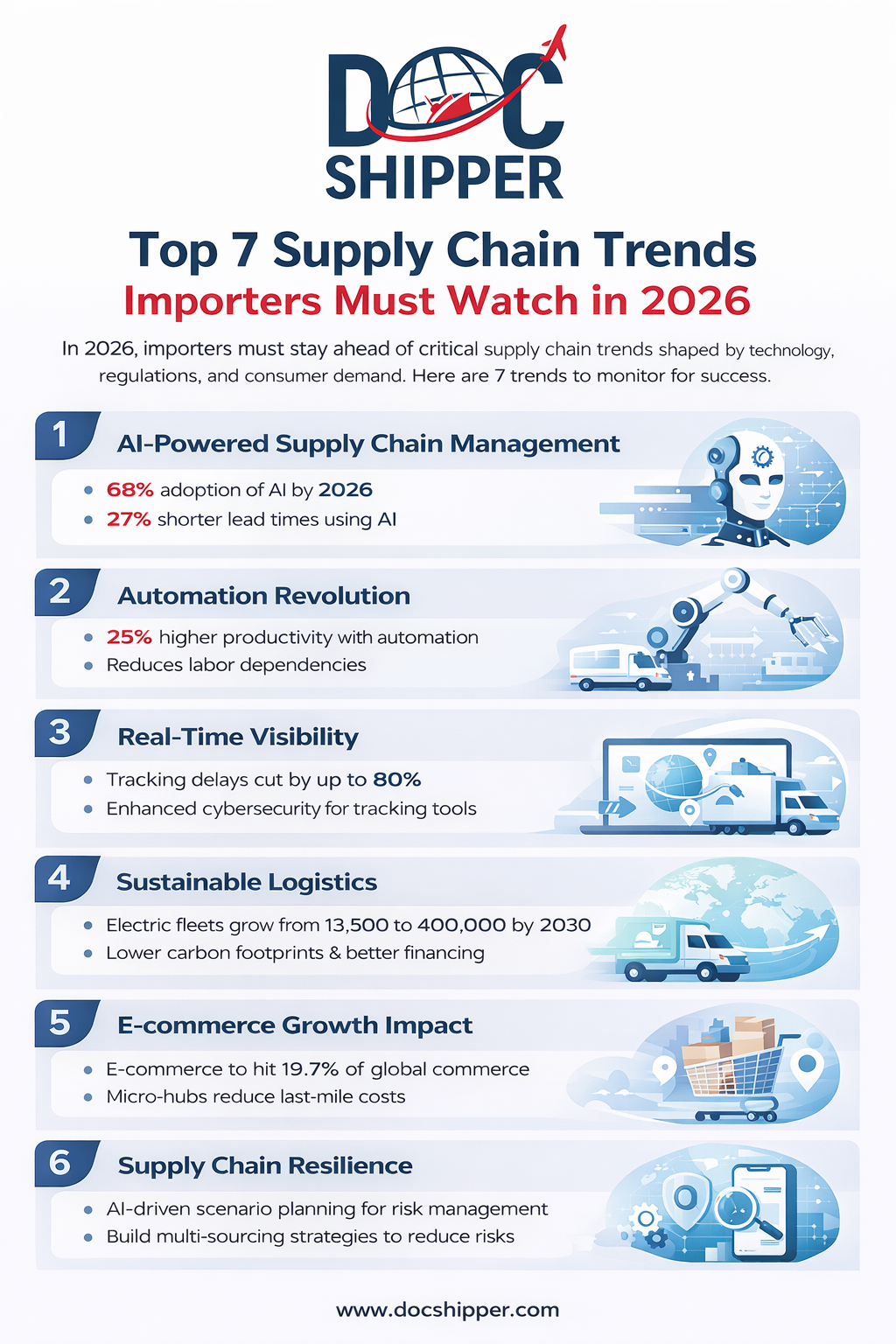
In 2026, supply chain dynamics are evolving faster than ever, driven by technology, regulation, and shifting consumer demand. For importers, staying competitive means understanding the key trends shaping logistics performance, cost structures, and resilience. The following seven supply chain trends highlight the most critical developments importers must monitor, and act on, to succeed in the 2026 logistics landscape.
1. AI-Powered Supply Chain Management for importers
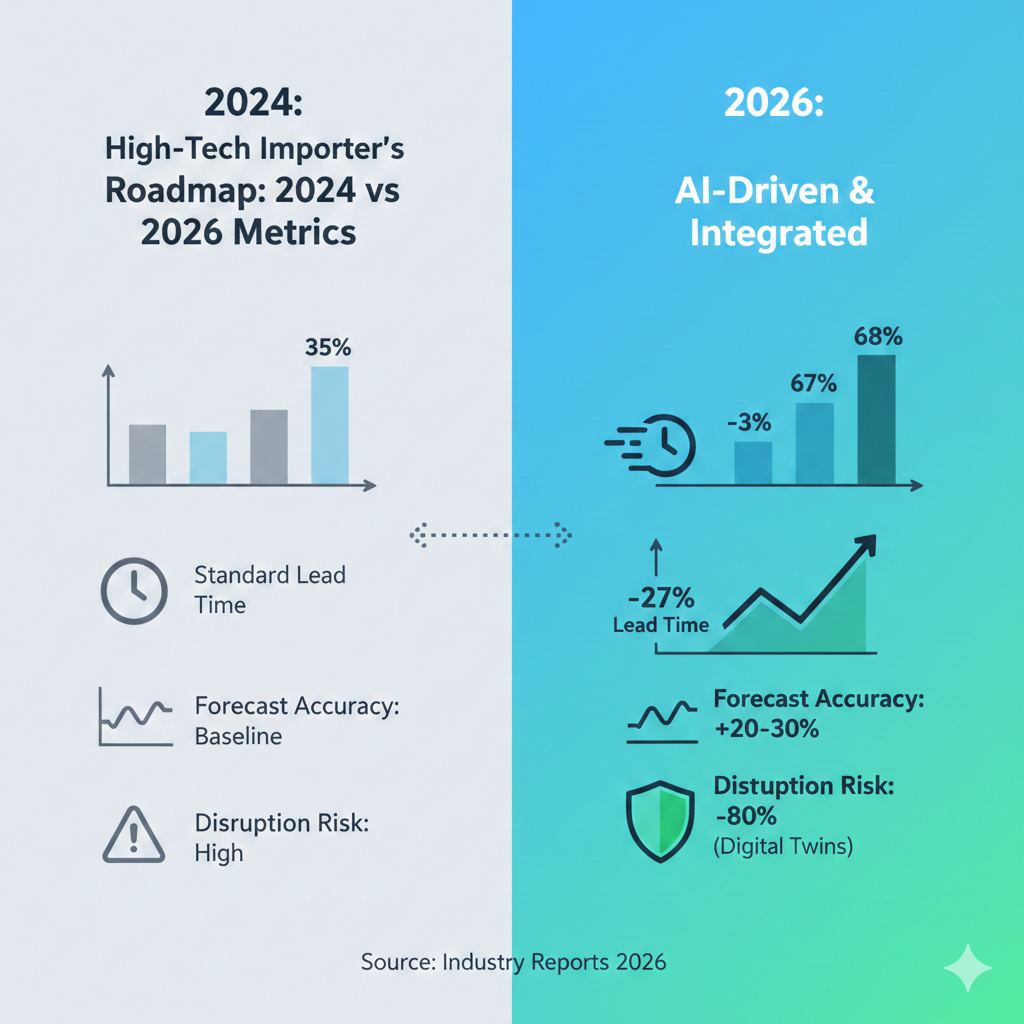
AI-powered supply chain management tops the supply chain trends for 2026, offering importers unprecedented efficiency. Global Trade Magazine highlights AI as essential for demand forecasting and task automation, reducing costs by optimizing routes and inventory. Importers adopting AI logistics can expect 27% shorter lead times, per nShift.
In practice, AI analyzes vast datasets to predict disruptions, enabling proactive adjustments. For importers, this means fewer stockouts and improved cash flow. As adoption climbs to 68% in 2026, those integrating AI will gain a competitive edge in the dynamic 2026 supply chain.
2. Automation Revolution in Logistics Operations
 The automation revolution is a core supply chain trend reshaping logistics operations. Supply chain automation, including robotic picking and autonomous vehicles, is set to stabilize warehouses, with Logistics Viewpoints noting a focus on orchestration and mixed-robot fleets. Importers can achieve 25% higher productivity through these systems.
Logistics trends 2026 predict widespread adoption, reducing labor dependencies amid shortages. For importers, supply chain automation minimizes errors and speeds fulfillment, crucial for handling e-commerce surges. Companies ignoring this trend risk higher costs in the evolving 2026 supply chain.
3. Real-Time Visibility: Supply Chain Tracking in 2026
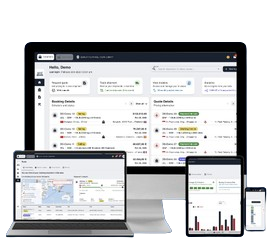
Real-time visibility emerges as a vital supply chain trend for 2026, with control towers evolving into action centers per Logistics Viewpoints. Importers gain end-to-end tracking via APIs and telematics, cutting delays by up to 80% with digital twins.
In 2026 logistics, this means instant alerts on disruptions, enabling quick rerouting. Importers should invest in platforms for multi-tier transparency, as KPMG emphasizes cybersecurity in visibility tools. This importers guide stresses that enhanced tracking boosts customer trust and operational resilience.
4. Sustainable Logistics: Green Supply Chain Trends
 Sustainable logistics is a defining supply chain trend in 2026, driven by regulations like EU’s ETS2. Global Trade Magazine notes digital route planning to reduce emissions, while nShift projects a shift to electric fleets, growing from 13,500 to 400,000 vehicles by 2030.
Importers must adopt green practices to comply and cut costs, sustainable execution in routing can lower carbon footprints significantly. In the 2026 supply chain, companies prioritizing ESG will access better financing and markets, making sustainability a strategic imperative.
5. E-commerce Growth Impact on Importers
E-commerce growth is profoundly impacting supply chain trends for importers in 2026. Prologis forecasts e-commerce at 19.7% of global commerce, accounting for 25% of warehouse leases. This surge demands agile inventory management to handle variable demand.
Importers face pressure for faster deliveries, with last-mile innovations like micro-hubs reducing costs (60-70% of parcel expenses). Logistics trends 2026 advise diversifying suppliers to support this growth, ensuring importers remain competitive in a digital-first market.
6. Supply Chain Resilience & Risk Management
 Supply chain resilience is a critical trend for 2026, with KPMG highlighting human-machine collaboration and risk modeling. Over 75% of businesses experienced delays in 2025, pushing importers toward diversified sourcing and nearshoring.
In the 2026 supply chain, AI-driven scenario planning will mitigate geopolitical risks. Importers should build multi-sourcing strategies, as Supply Chain 247 advises, to handle tariffs and disruptions, ensuring continuity and cost stability.
7. Digital Twins & Predictive Analytics for Supply Chain
Digital twins and predictive analytics round out key supply chain trends, improving forecast accuracy by 20-30% per nShift. Logistics Viewpoints sees them as workhorses for real-time scenario evaluation.
For importers, these tools simulate networks to preempt issues, reducing downtime by 80%. In 2026 logistics, integrating predictive analytics with AI logistics enhances decision-making, making it essential for efficient import operations.
Aspect | Traditional Supply Chain | AI-Powered Supply Chain |
Time | Standard processing times | -27% with AI |
Delays | Frequent due to manual errors | -80% with digital twins |
Precise prevision | Baseline accuracy | +20-30% with digital twins |
Regional Supply Chain Trends Importers Should Know
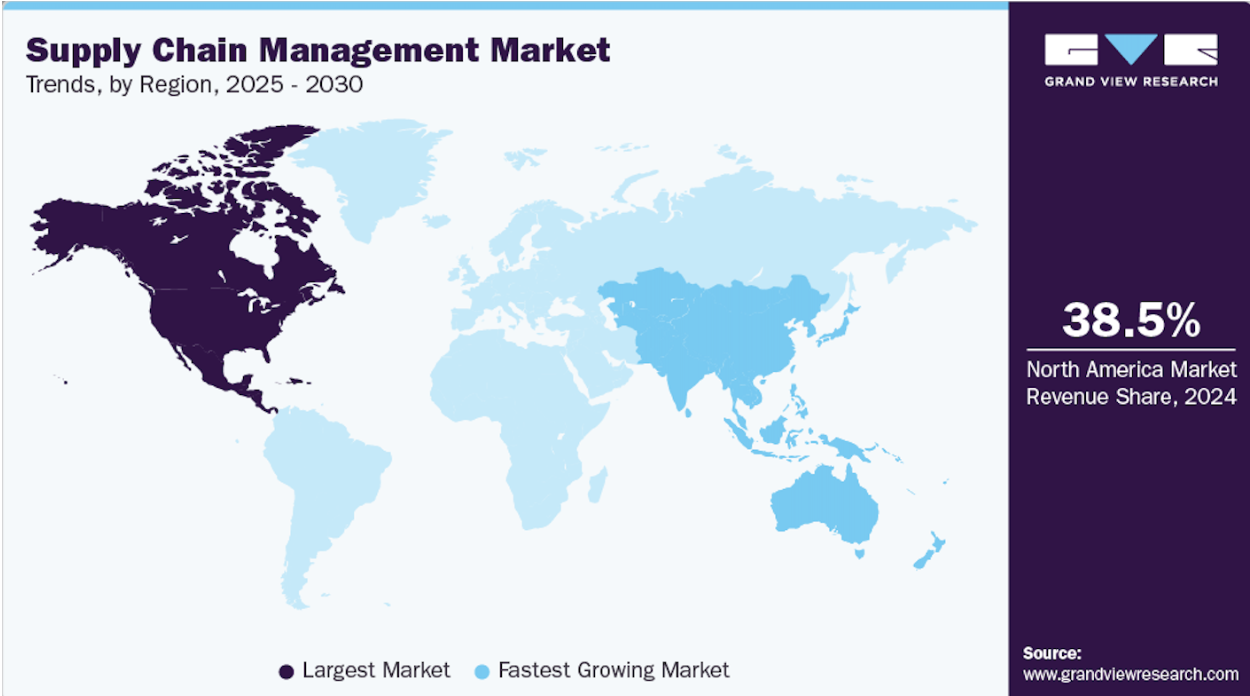
Supply chain trends in 2026 vary significantly by region, shaped by local regulations, infrastructure investments, and market dynamics. Importers operating globally must understand these regional differences to remain compliant, competitive, and cost-efficient. The following regional insights highlight the most important developments across Europe, Asia-Pacific, and North America.
EU regulations and supply chain compliance in 2026
 European Union regulatory developments demand importer attention. The Fit for 55 package targets 55% emissions reduction by 2030, with immediate implications for maritime transport carbon pricing. The expanded Emissions Trading System (ETS2) extends carbon costs across additional transport modes.
The electronic Freight Transport Information (eFTI) regulation, fully implemented in 2026, requires digital documentation for cross-border transport. Paper-based processes face elimination, forcing importers to adopt electronic systems for customs declarations, CMR documents, and safety certificates.
Compliance complexity increases costs and operational burden. However, importers investing in digital documentation and carbon reporting infrastructure gain competitive advantages. These capabilities become prerequisites for European market access rather than optional enhancements.
Asia-Pacific logistics trends for importers

Freight rate predictions for importers in 2026
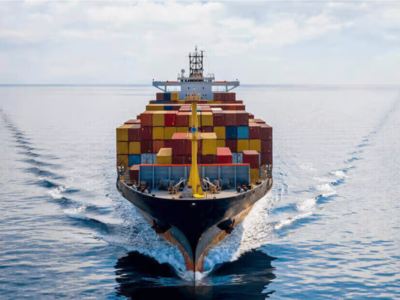 Freight rate forecasts for 2026 show stabilization after years of volatility. Container shipping rates have normalized from pandemic peaks, though they remain above 2019 baseline levels.
- Capacity additions across major carriers increase available space, creating more balanced supply-demand dynamics.
- However, regional variations persist, with Asia-Europe routes facing different pricing pressures than transpacific lanes.
- Importers should expect continued rate fluctuations based on seasonal demand, fuel costs, and geopolitical developments.
- Long-term contracts with freight forwarders provide rate stability and capacity guarantees.
- Air freight costs remain elevated compared to pre-pandemic levels.
- Passenger flight capacity, which provides substantial belly cargo space, has not fully recovered.
- Importers relying on air transport for time-sensitive goods should budget for premium rates and consider hybrid transport solutions combining ocean and air modes.
Capacity management strategies for supply chain
Capacity constraints continue challenging importers across transportation modes and warehouse space. Strategic capacity management requires long-term planning, strong carrier relationships, and operational flexibility.
Successful importers secure capacity through multiple approaches:
- annual contracts guaranteeing space allocation
- diversified carrier portfolios reducing dependence on single providers
- flexible scheduling accommodating carrier availability.
These strategies prevent the capacity crunches that disrupted supply chains in recent years.
Warehouse capacity management demands equal attention. E-commerce growth drives 25% of warehouse leasing, creating competition for distribution center space in prime locations. Importers should secure warehouse capacity ahead of peak seasons and consider flexible warehousing solutions that scale with volume fluctuations.


Fill the Form
Prefer email? Send us your inquiry, and we’ll get back to you as soon as possible.
Contact us