


In short ⚡
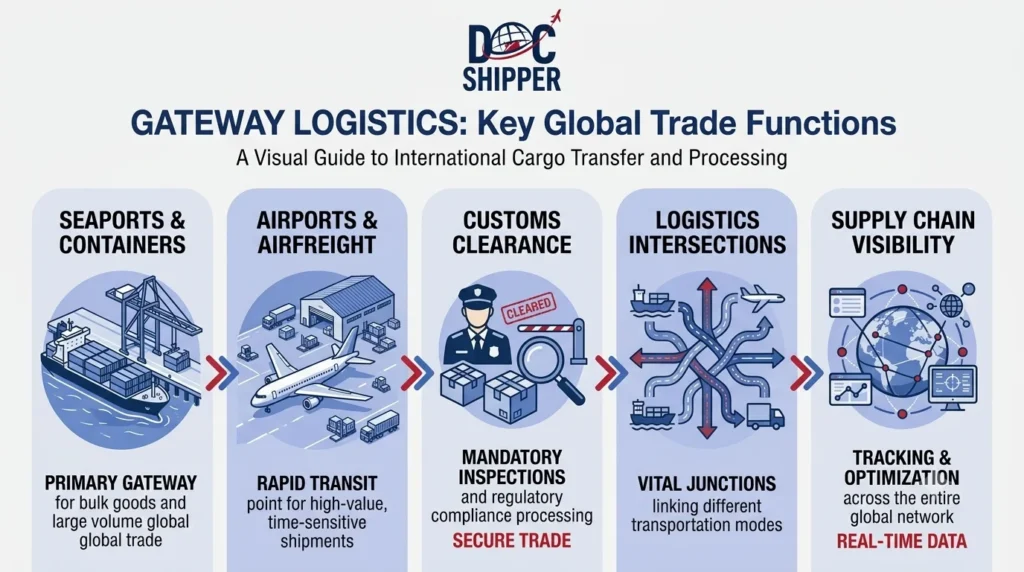
A Gateway is a strategic hub or transit point where international cargo is consolidated, sorted, and redistributed toward final destinations. It serves as a critical node in global supply chains, connecting different transportation modes and geographic regions while facilitating customs clearance and cargo transfers efficiently.
Introduction
Many importers and exporters confuse gateways with simple transit points, underestimating their strategic role in optimizing supply chain efficiency. Yet choosing the right gateway can reduce transit times by days and cut costs significantly.
In international trade, gateways function as nerve centers where cargo flows converge and diverge. They enable multimodal transportation, connecting sea, air, rail, and road networks seamlessly.
Key characteristics of effective gateways include:
- Infrastructure capacity – Advanced port facilities, warehouses, and handling equipment
- Connectivity – Direct links to multiple transportation modes and trade routes
- Customs efficiency – Streamlined clearance processes and regulatory compliance
- Strategic location – Proximity to major manufacturing zones or consumer markets
- Technology integration – Digital tracking systems and automated cargo handling
Gateway Operations & Strategic Importance
Gateways operate as consolidation centers where Less-than-Container-Load (LCL) shipments from multiple suppliers merge into Full-Container-Load (FCL) units. This process dramatically reduces per-unit shipping costs and improves container utilization rates.
The deconsolidation function works inversely, breaking down large shipments into smaller consignments for final delivery. Major gateways like Singapore, Rotterdam, and Los Angeles handle millions of TEUs annually through these operations.
From a regulatory perspective, gateways serve as first points of entry where customs authorities inspect documentation and verify cargo compliance. The European Union’s Single Window environment, accessible via official EU customs portals, exemplifies how modern gateways digitize clearance procedures.
Gateway selection directly impacts inventory management strategies. Companies using Just-in-Time (JIT) manufacturing prioritize gateways with rapid turnaround times, while those focused on cost optimization may choose gateways with lower handling fees despite longer dwell times.
The transshipment capability distinguishes premier gateways from basic ports. Facilities like Dubai’s Jebel Ali handle cargo that never enters the local market, serving purely as transfer points between international routes. At DocShipper, we analyze transshipment patterns to identify the most efficient routing options for our clients’ specific trade lanes.
Types of Gateways & Real-World Applications
Global logistics recognizes several gateway categories, each serving distinct supply chain functions. Understanding these classifications helps businesses optimize their international shipping strategies.
| Gateway Type | Primary Function | Example Location | Typical Processing Time |
|---|---|---|---|
| Ocean Gateway | Deep-sea vessel handling and container transfers | Shanghai, Singapore | 24-48 hours |
| Air Gateway | Express cargo and time-sensitive shipments | Hong Kong, Dubai | 6-12 hours |
| Land Gateway | Cross-border rail and truck freight | Khorgos, Malaszewicze | 12-24 hours |
| Dry Port Gateway | Inland customs clearance and distribution | Duisburg, Dallas | 24-36 hours |
Use Case: Electronics Importer – A European retailer sources smartphones from Shenzhen. Using Hong Kong as an air gateway, they achieve 72-hour door-to-door delivery versus 28 days via ocean freight. The premium cost increases margins by reducing inventory holding expenses and enabling rapid product launches.
Transshipment Hub Performance – Singapore’s gateway handles approximately 37 million TEUs annually, with over 80% representing transshipment cargo. This model generates revenue through handling fees while supporting regional distribution networks across Southeast Asia.
Gateway Congestion Impact – During peak seasons, Los Angeles-Long Beach gateway dwell times can extend from 3 days to 12+ days. Smart shippers diversify gateway usage, routing cargo through Oakland or Seattle to maintain schedule reliability.
Regulatory Compliance – The U.S. Customs and Border Protection’s Automated Commercial Environment (ACE) system processes entry documentation at gateway ports. Incorrect HS codes or missing certificates trigger inspections that delay clearance by 5-10 business days on average.
Cost Optimization Strategy – A furniture importer reduces landed costs by 18% by switching from direct shipment to gateway consolidation. They combine LCL cargo from five Vietnamese suppliers at Ho Chi Minh City gateway before forwarding consolidated containers to European distribution centers.
Conclusion
Gateways represent critical infrastructure in international logistics, directly influencing transit efficiency, cost structures, and supply chain resilience. Strategic gateway selection requires analyzing connectivity, processing capabilities, and regulatory environments.
Need expert guidance on optimizing your gateway strategy? Contact DocShipper for customized logistics solutions tailored to your trade lanes and business requirements.
📚 Quiz
Test Your Knowledge: Gateway
What is the primary function of a gateway in international logistics?
A manufacturer believes they should always choose the gateway closest to their final destination. Is this approach optimal?
An electronics retailer needs smartphones from Shenzhen delivered to Europe within 72 hours. Which gateway strategy should they apply?
🎯 Your Result
📞 Get Free Quote in 24hFAQ | Gateway: Definition, Functions & Practical Examples in Logistics
A gateway provides comprehensive multimodal connectivity and cargo processing services beyond basic loading/unloading. It includes customs facilities, consolidation warehouses, and connections to rail, road, and air networks. Standard ports may lack these integrated capabilities, functioning primarily as vessel berthing points.
Free trade zones within gateways allow duty-deferred storage, enabling importers to hold inventory without paying customs duties until goods enter the domestic market. This improves cash flow and permits value-added activities like repackaging or light manufacturing under preferential tax treatments.
Most countries designate specific gateways as "first ports of entry" where customs authorities maintain inspection facilities and staff. Attempting clearance at non-designated locations results in cargo redirection and additional costs. Verify authorized entry points with customs authorities before shipping.
Digital platforms enable real-time cargo tracking, automated documentation submission, and predictive analytics for congestion management. Systems like TradeLens and GSBN provide blockchain-based transparency, reducing paperwork errors and accelerating customs clearance by 40% in participating gateways.
Gateway congestion increases demurrage and detention charges, which can exceed $200 per container daily. Extended dwell times also inflate inventory carrying costs and may require expedited final-mile delivery to meet customer commitments. Diversifying gateway usage mitigates these risks.
Yes, dry ports function as inland gateways offering full customs clearance and intermodal transfer capabilities. They reduce congestion at coastal ports while providing geographical flexibility. Major dry ports like Madrid's logistics hub process over 500,000 TEUs annually with complete gateway services.
Essential documents include commercial invoices, packing lists, bills of lading, certificates of origin, and product-specific compliance certificates (FDA, CE, etc.). Electronic filing through Single Window systems streamlines submission, but document accuracy remains critical to avoid clearance delays.
Carriers evaluate gateway infrastructure capacity, connectivity to target markets, handling efficiency metrics, and cost structures. Long-term partnerships often include dedicated berths, priority processing agreements, and volume-based incentives that reduce per-unit handling expenses.
Absolutely. Gateway consolidation allows small importers to access FCL shipping rates despite ordering smaller quantities. Third-party logistics providers combine multiple clients' cargo, distributing fixed costs across participants and reducing individual shipping expenses by 30-50% compared to direct LCL rates.
Premium gateways offer secure storage areas with 24/7 surveillance, biometric access controls, and dedicated customs bonding. High-value shipments may receive escort services during transfers and real-time GPS tracking. Insurance requirements often mandate these enhanced security protocols for goods exceeding $100,000 value.
Rising sea levels threaten coastal gateways, prompting infrastructure investments in flood barriers and elevated facilities. Extreme weather events increase operational disruptions, making gateway diversification essential for supply chain resilience. Some regions are developing inland gateways as climate-resistant alternatives.
Evaluate transit time to final destination, total landed cost including handling fees, customs clearance efficiency, carrier service frequency, infrastructure reliability, and regulatory compliance support. Geographic proximity to markets matters less than overall supply chain velocity and cost-effectiveness for most shipments.
Need Help with
Logistics or Sourcing ?
First, we secure the right products from the right suppliers at the right price by managing the sourcing process from start to finish. Then, we simplify your shipping experience - from pickup to final delivery - ensuring any product, anywhere, is delivered at highly competitive prices.


Fill the Form
Prefer email? Send us your inquiry, and we’ll get back to you as soon as possible.
Contact us




